
The Salem witch trials, which took place in colonial Massachusetts in the late 17th century, stand as one of the most infamous events in American history. Lasting from 1692 to 1693, this episode saw a wave of hysteria and paranoia sweep through the Puritan settlement of Salem Village (present-day Danvers). Accusations of witchcraft led to the imprisonment, trial, and execution of numerous individuals, mostly women, leaving an indelible mark on the collective memory of the United States. In this essay, we will delve into the causes, events, and consequences of the Salem witch trials, seeking to shed light on this dark and perplexing period.
Causes and Context:
To understand the Salem witch trials, it is necessary to examine the broader historical, social, and religious context in which they occurred. The Puritans, a deeply religious community, believed in the existence of witches as agents of the devil and viewed any departure from their strict religious doctrine as a potential threat to their society. Additionally, Salem Village faced political, economic, and social tensions that further contributed to the outbreak of witchcraft accusations. The community was marked by rivalries between different factions, conflicts over land ownership, and a general atmosphere of fear and uncertainty brought about by wars with Native Americans and the constant threat of attack.
The Outbreak:
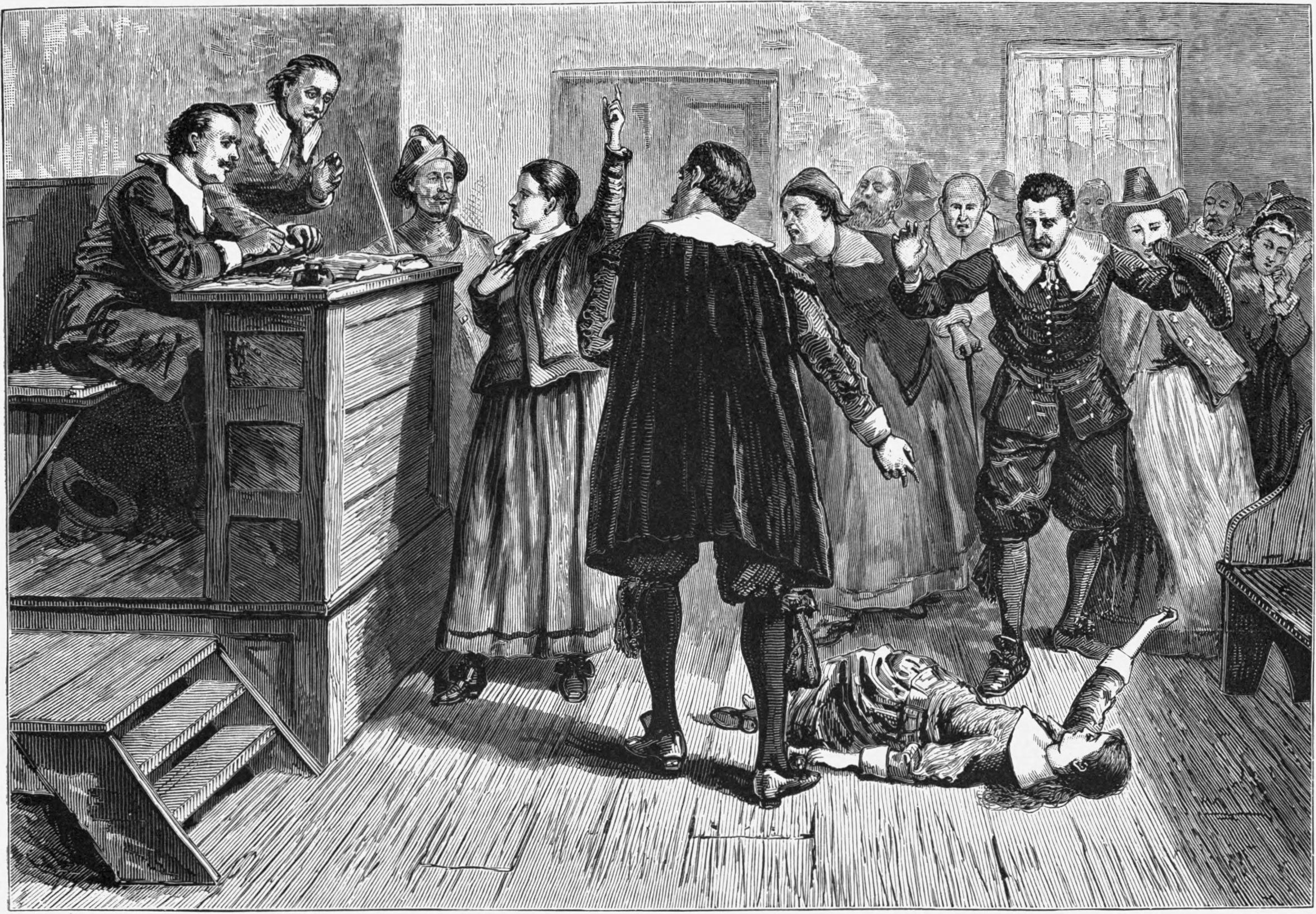
The witch trials began in early 1692 when two young girls, Betty Parris and Abigail Williams, started exhibiting strange behavior that was attributed to witchcraft. Their symptoms included fits, contortions, and claims of being afflicted by supernatural forces. This alarmed the community, and the search for the witches responsible commenced. The first accused were Tituba, a Caribbean slave, Sarah Good, and Sarah Osborne, who were viewed as outcasts within the community. These initial accusations set in motion a cycle of paranoia, leading to a snowball effect as more and more individuals were accused of practicing witchcraft.
Trials and Hysteria:
The accused individuals faced trials before local magistrates and judges who conducted proceedings based on dubious spectral evidence and testimonies of alleged victims. The accused were often subjected to harsh interrogation techniques, including deprivation, sleeplessness, and even physical torture. The trials were characterized by a presumption of guilt, and the burden of proof rested heavily on the accused to prove their innocence. Those who maintained their innocence were often seen as defiant and subjected to further suspicion.
 you
The Consequences:
During the course of the Salem witch trials, nineteen individuals were executed by hanging, while several others died in jail awaiting trial or as a result of harsh prison conditions. Among the victims were respected members of the community, including Rebecca Nurse and George Burroughs, a former minister. As the trials progressed, doubts and skepticism about the validity of the accusations began to surface. Influential figures such as Increase Mather, a prominent Puritan minister, expressed reservations about the trials, leading to a gradual decline in public support for the proceedings.
End of the Trials and Aftermath:
By late 1692, the tide began to turn against the witch trials. Governor William Phips disbanded the special court created to handle the cases and prohibited the use of spectral evidence. As the frenzy subsided, the imprisoned individuals were released, and the surviving accused received pardons. The aftermath of the trials saw a collective sense of guilt and shame among the people of Salem, and efforts were made to compensate the families of the victims. In 1711, the Massachusetts colonial government declared the trials unlawful, and a public apology was issued to the victims.
Legacy and Lessons:
The Salem witch trials left an indelible mark on American history and serve as a reminder of the dangers of mass hysteria, intolerance, and the abuse of power. The trials exposed the flaws of the judicial system and highlighted the importance of due process and the presumption of innocence. They also brought to the forefront the significant role of gender in the accusations, as the majority of the accused were women. The trials had a lasting impact on the psyche of the American people and became a cautionary tale against the dangers of religious extremism and the scapegoating of marginalized individuals.
Conclusion:
The Salem witch trials remain a haunting chapter in American history, representing a dark period of fear, superstition, and intolerance. They unfolded in a complex web of religious, social, and political tensions, ultimately leading to the imprisonment and execution of innocent individuals. The trials revealed the fragility of justice and the susceptibility of societies to mass hysteria. Today, the Salem witch trials serve as a potent reminder of the importance of safeguarding individual rights, promoting tolerance, and learning from the mistakes of the past.





Leave A Comment