

Six skeletons have been recovered from the wreck Captain ‘Black Sam’ Bellamy’s pirate ship, the Whydah, which sank more than 300 years ago in waters off New England in 1717.
The remains were identified in several large concretions – hard, compact masses of stone and sand which form on the seabed – which were examined back on land. The bones were found packed inside, and can be seen on x-rays of the blocks.
The Whydah sank in 1717 with Black Sam, the most infamous and successful pirate ever to sail the sea, and 146 souls on board that day. Of that number, 102 bodies washed ashore and eight pirates were captured, tried and hanged. The rest, including Bellamy, may well lie at the bottom, pinned under cannon and other heavy objects that crashed through decks when the ship broke apart on a sandbar and capsized.
The Whydah Galley ship was discovered in 1984 and is the world’s only authenticated pirate wreck.
The 400-pound concretion, sitting on the floor in the lab of the Whydah Pirate Museum, was actually flipped upside down from how it was found off Marconi Beach in Wellfleet. The glacial till of smooth cobblestones covered its underside, captured by the electrolytic fusing process of shipwreck iron and seawater that created it.
It took an X-ray to find something decidedly not metallic: a pirate, his rib cage crushed, upper arm dislocated at the shoulder, and encased in this concrete tomb for nearly 304 years.
Over the centuries, the iron, seawater, sand and rocks fused into a watery tomb for many of those unlucky pirates.
Barry Clifford, whose team discovered the wreck in 1984, said he has over 200 of those concretions, some weighing over 5½ tons, that have been raised from the bottom and stored in a warehouse/lab in Brewster. Conservators such as Chris Macort have been methodically X-raying each piece, looking for what the centuries have hidden from view, such as delicate necklaces and jewellery, gold and silver coins, pistols and rifles, the ship’s bell and the remains of six to eight pirates.
-
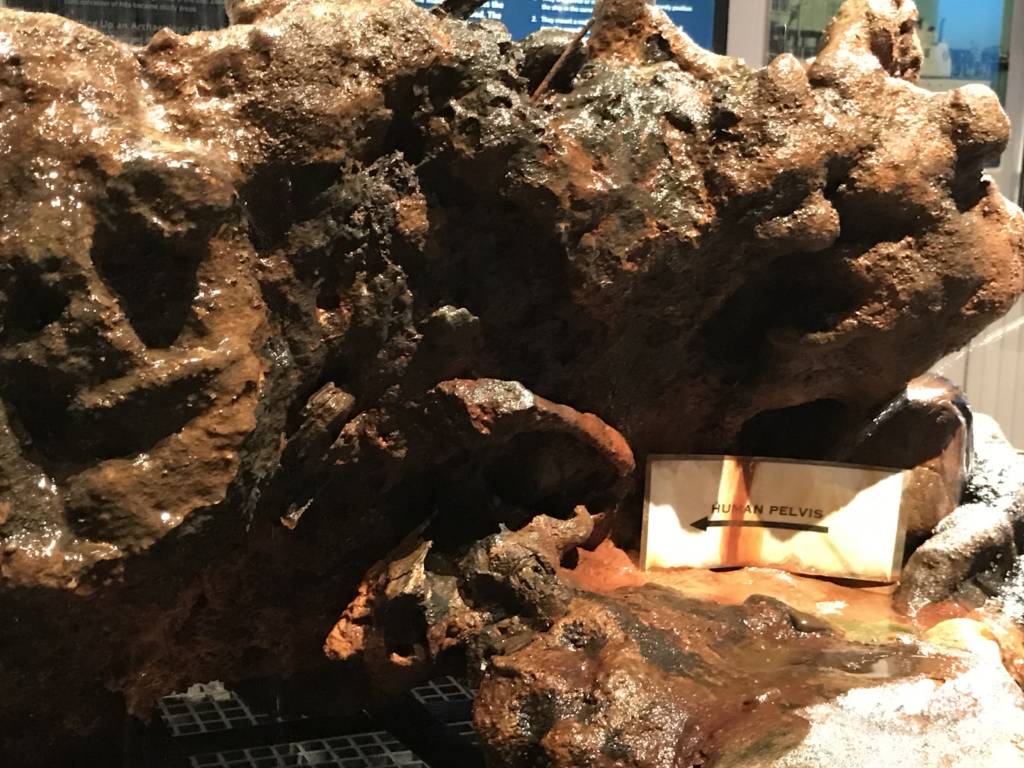
- Encrusted skeletal remains.
-

- Skeletal remains inside concretion from the shipwreck
-
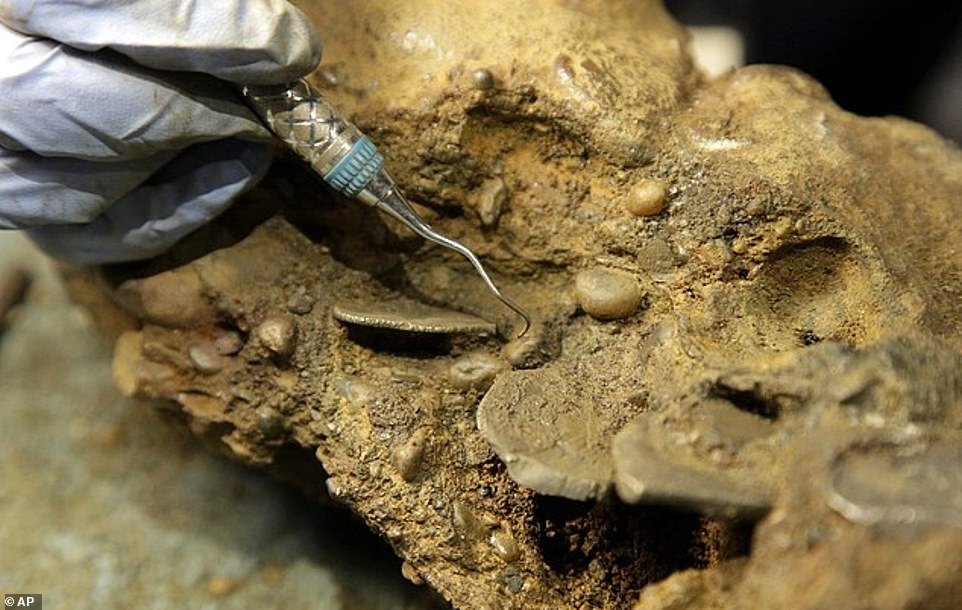
- Archaeologist Marie Kesten Zahn works to remove silver coins from a concretion
-
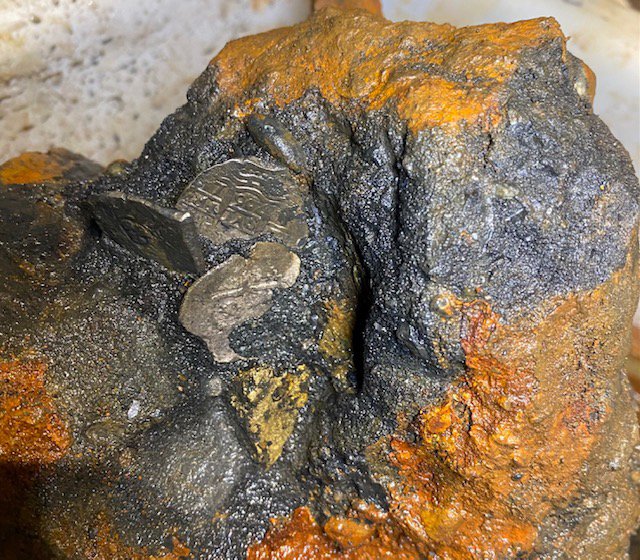
- Silver coins in situ
-

- Various items dicovered in a concretion
-

- Treasure chests filled with coins and artifacts from the wreck
-
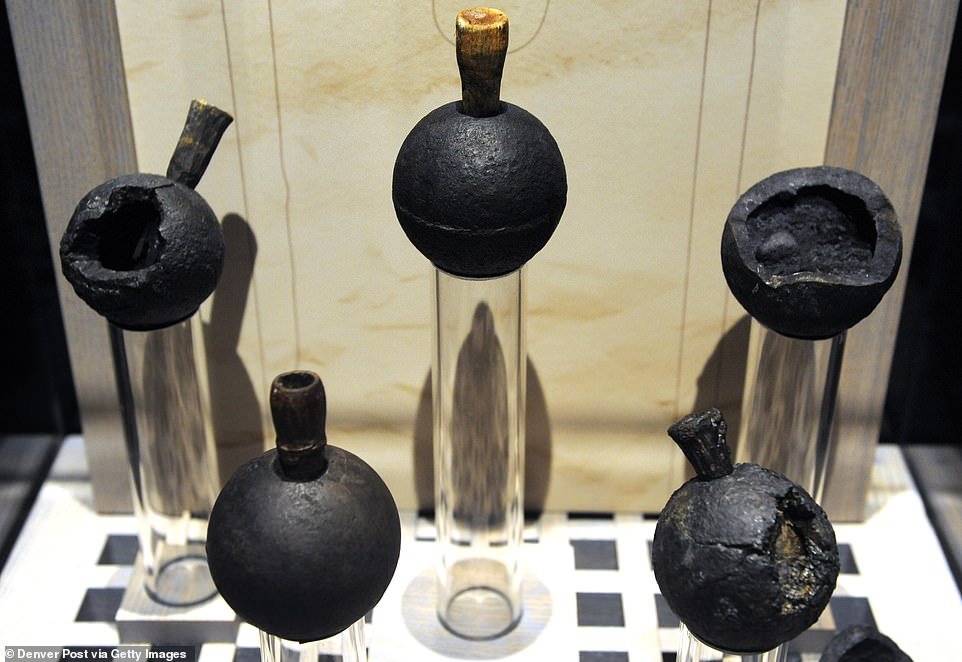
- Grenades from the vessel discovered on the ocean floor
-
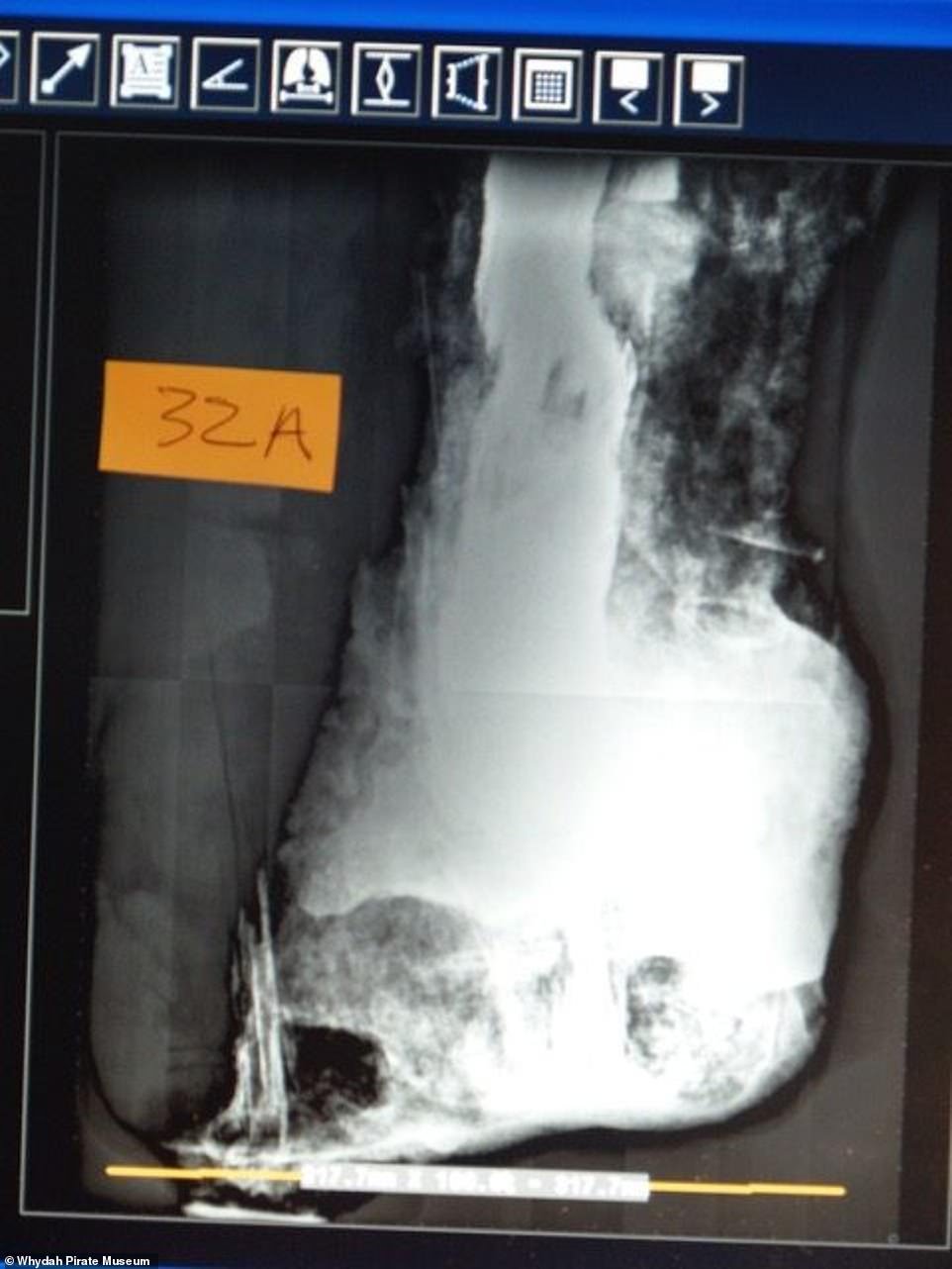
- Bones appear on x-rays that have been used to examine what was inside the concretion
-
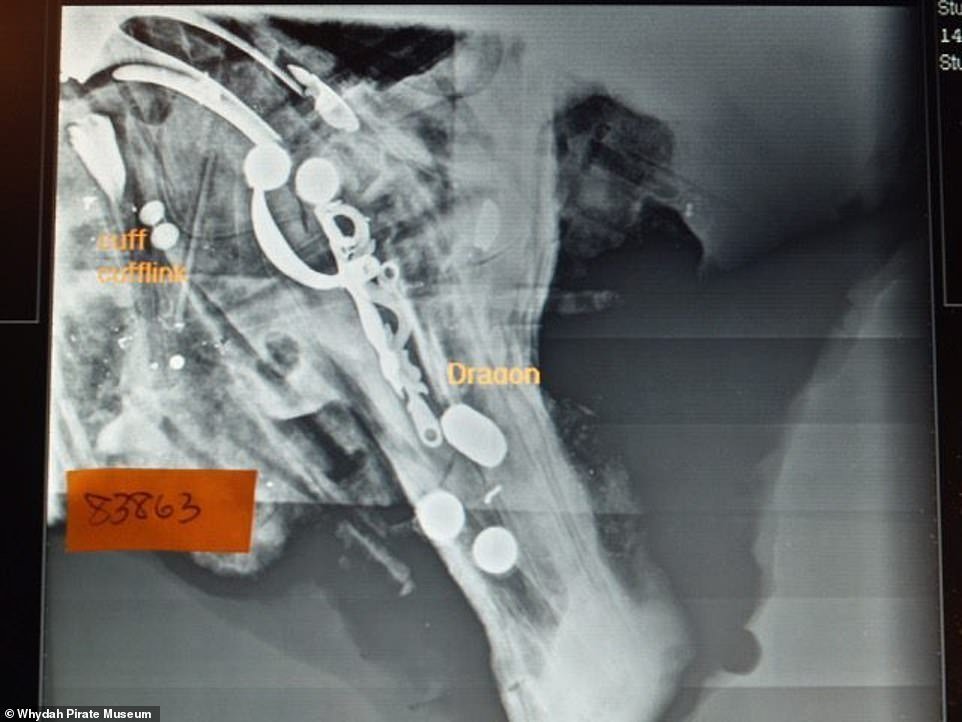
- X-rays reveal part of what is buried in the concrete which is currently being examined
Two years ago, Whydah museum conservators extracted a human femur from a huge concretion. Acting on the belief it might be Bellamy’s remains, the bone was taken to the Henry C. Lee Institute of Forensic Science at the University of New Haven. The lab meticulously cleaned off layers of bacteria, then crushed a sample and captured its genetic sequence. A member of the team travelled to Devonshire in England, where Black Sam was born to collect a DNA sample from descendent Simon Bellamy. However it didn’t prove to be a match.
Clifford states that one-third of the crew was likely freed slaves. Other crew members were likely forced to join, or chose the pirate lifestyle over one as an impressed sailor under the harsh command of autocratic captains.
“One of the challenges is that the ship didn’t have a manifest” listing who was on board, Author Casey Sherman said.
But Clifford said the world of DNA tracing has changed in even the short time since they tried to link Bellamy’s genetics to the femur freed from the rock. The closest the New Haven lab could get was that the man’s genetics showed an Eastern Mediterranean origin, but thanks to the popularity of ancestry-tracing services, people have contributed their DNA to create huge databases that could take the DNA signature isolated by the New Haven lab and trace its lineage to modern day descendants.
“It’s a long, long process,” said Clifford, “As it continues, it will be very interesting to see who this belongs to.”
To keep up to date with all our news, you can get our free Android app by clicking here.
Alternatively our iOS app is available free from the appstore here




Leave A Comment