
Through various hobbies and interests I have been able to learn about many places and have been fortunate to visit some.
Many of the better known historic locations in the UK are in built up environments, or are that well known that they receive a steady stream of visitors. However Old St Chad’s has to be one of my favourites. Not only for the astounding views and interesting things to peruse, but also for being one of the most peaceful and serene places I know.
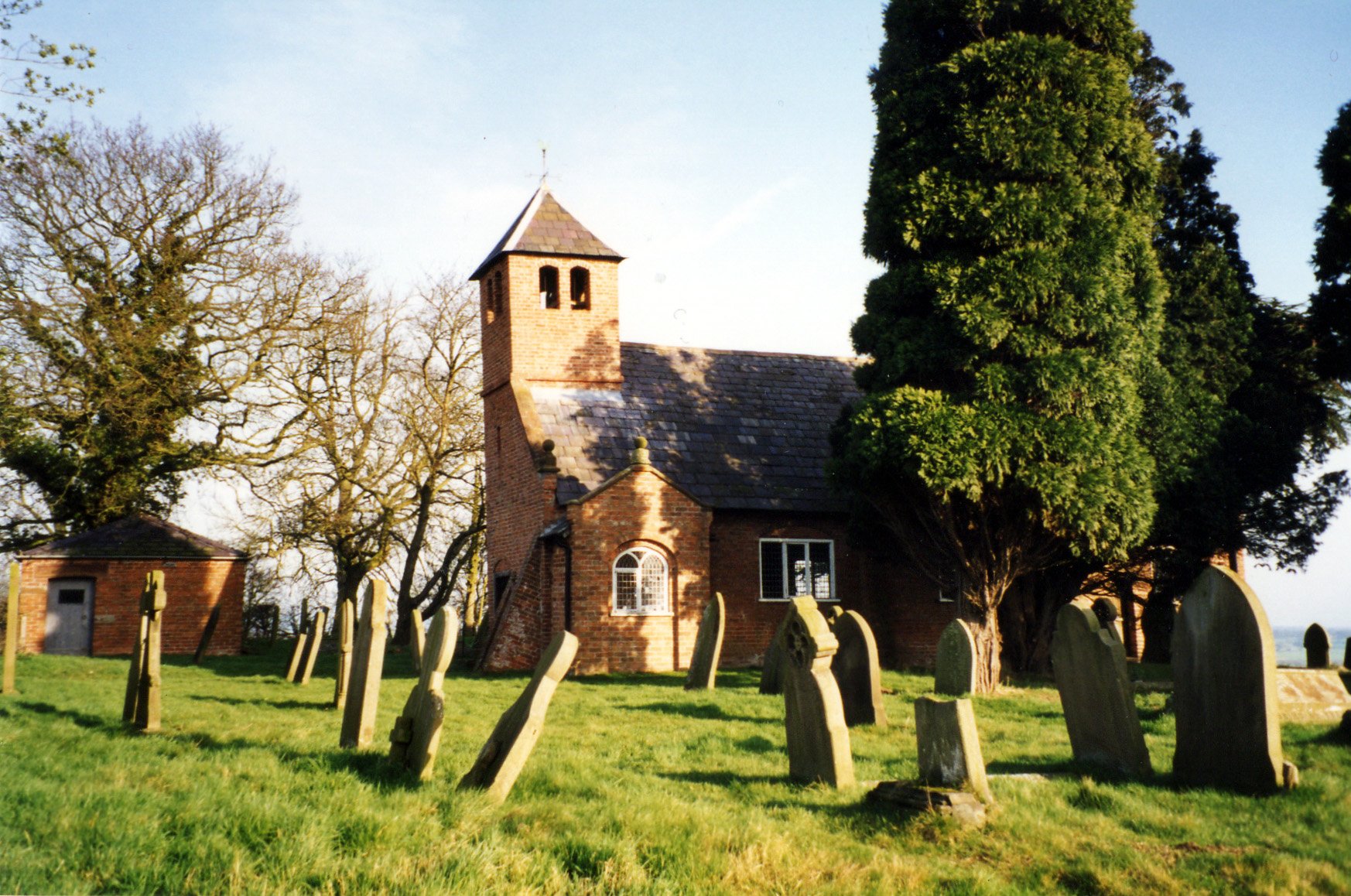
St Chad’s Chapel (often referred to as Old St Chad’s) is an isolated church in the scattered community of Tushingham in the civil parish of Tushingham-cum-Grindley, Macefen and Bradley, Cheshire, England. The only approach to the chapel is on footpaths across fields from the A41 road. It is recorded in the National Heritage List for England as a designated Grade I listed building.
Finding Old Saint Chad’s is probably the hardest thing you’re ever likely to do, the only people to know of its existence are the locals.
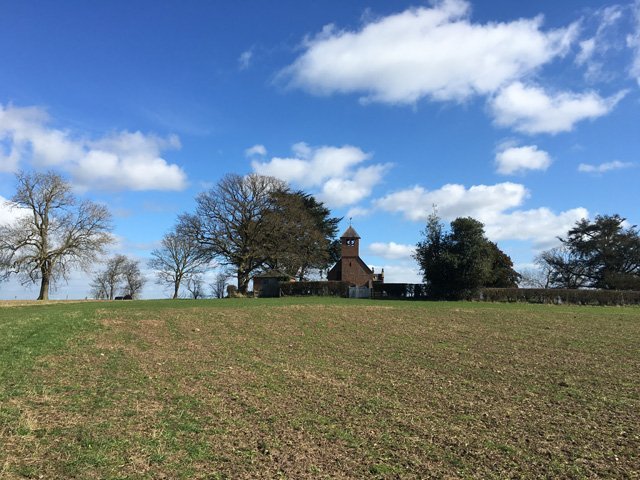
Its setting, when found, is idyllic. From the main A41 Highroad, a narrow country track of around half a mile leads to a dead end with three gates leading into the fields. They are the only visible means to carry on.
Looking over the middle gate a church spire is barely visible in the dip between the trees; another short walk is therefore required down the hill along a faint trail which leads straight to the churches front gate. Old Saint Chad’s is totally alone in the fields.
When a Victorian church was built nearly a mile away – New Saint Chad’s – in 1863, this tiny chapel was left to stand as its graveyard was the only one in the parish, and remains so today. It is recorded in the National Heritage List for England as a designated Grade I listed building
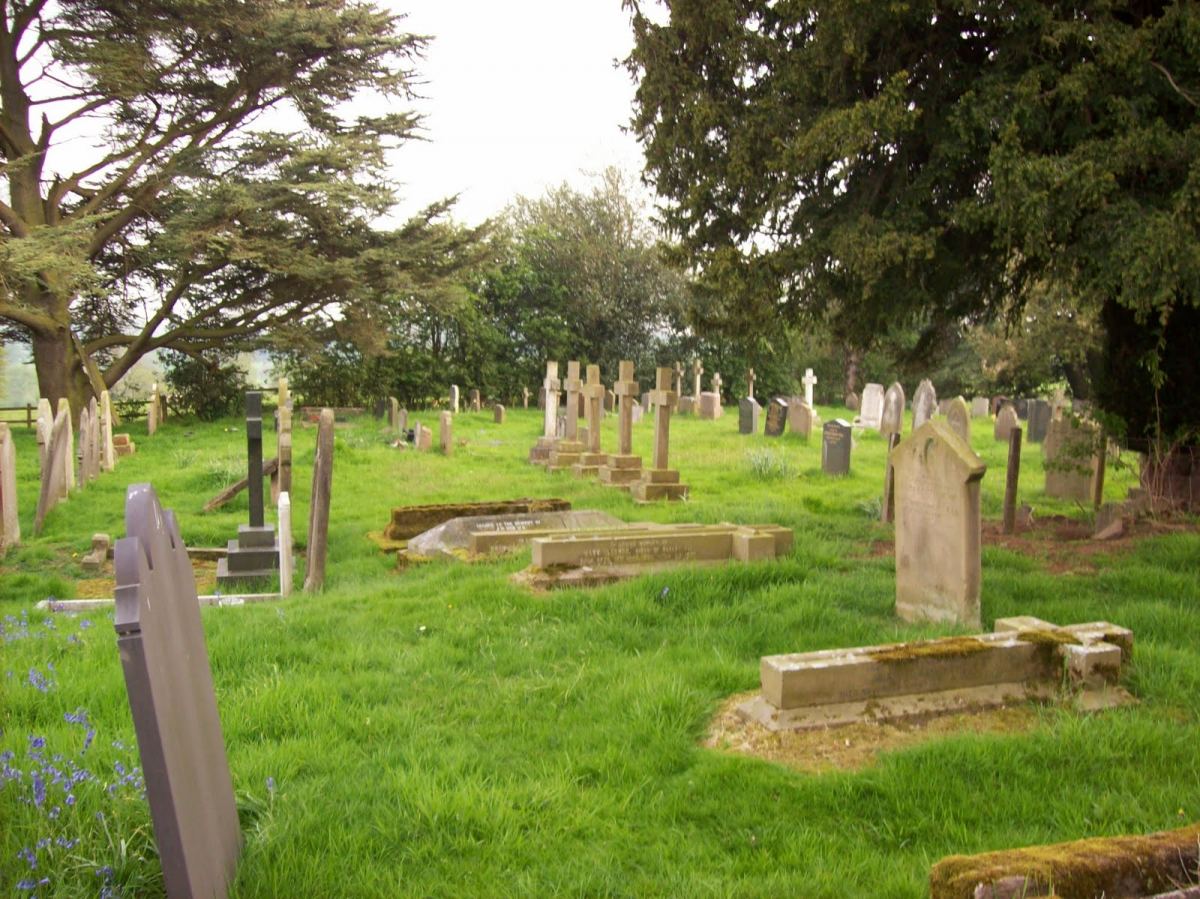
Deeds dated 1349 refer to a timber framed chapel on this site. But Old Saint Chad’s itself was originally built in 1689. It was built upon the foundations of the older timber framed church. Local gentry have long patronized the church, with a gallery and viewing box reflecting their influence. The principal financial donations for the chapel however, were from John Dod, a London mercer who had been born in Tushingham
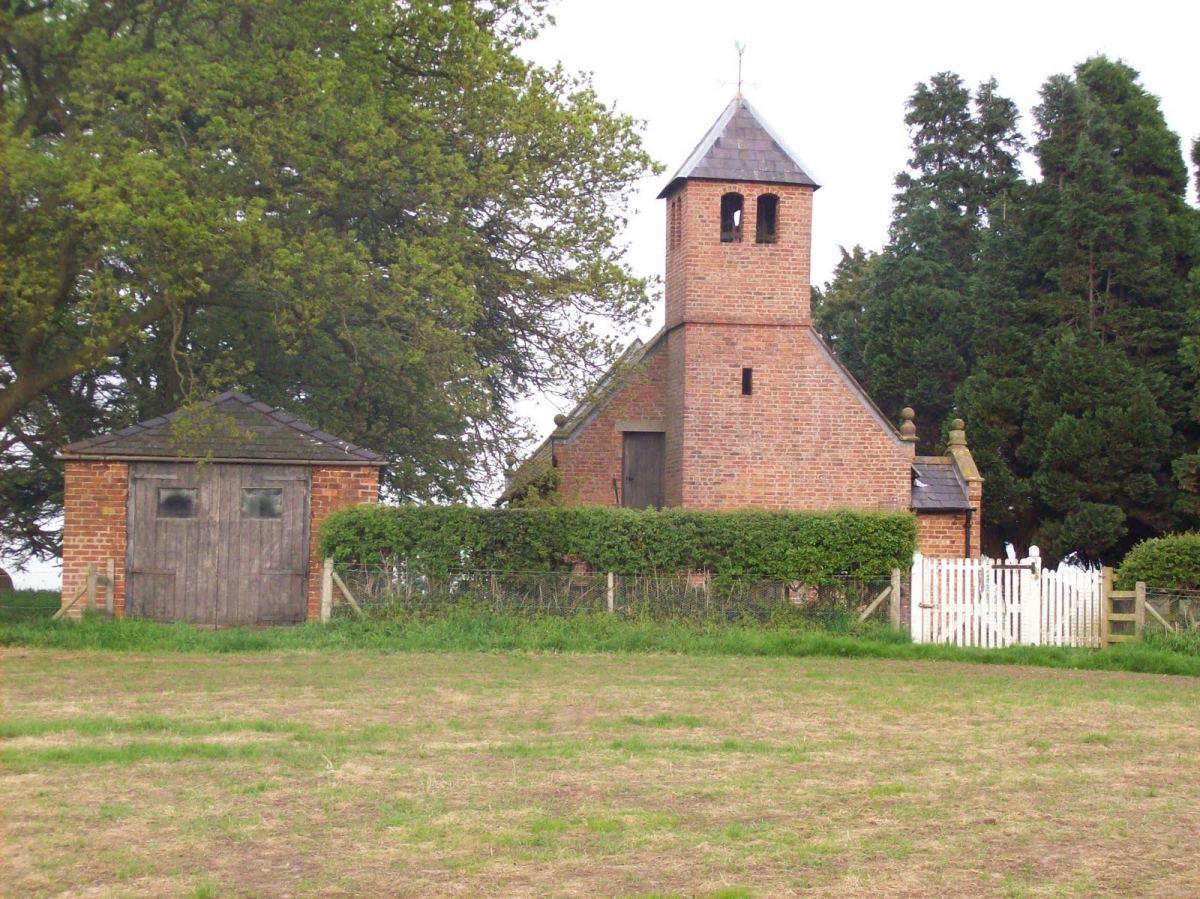
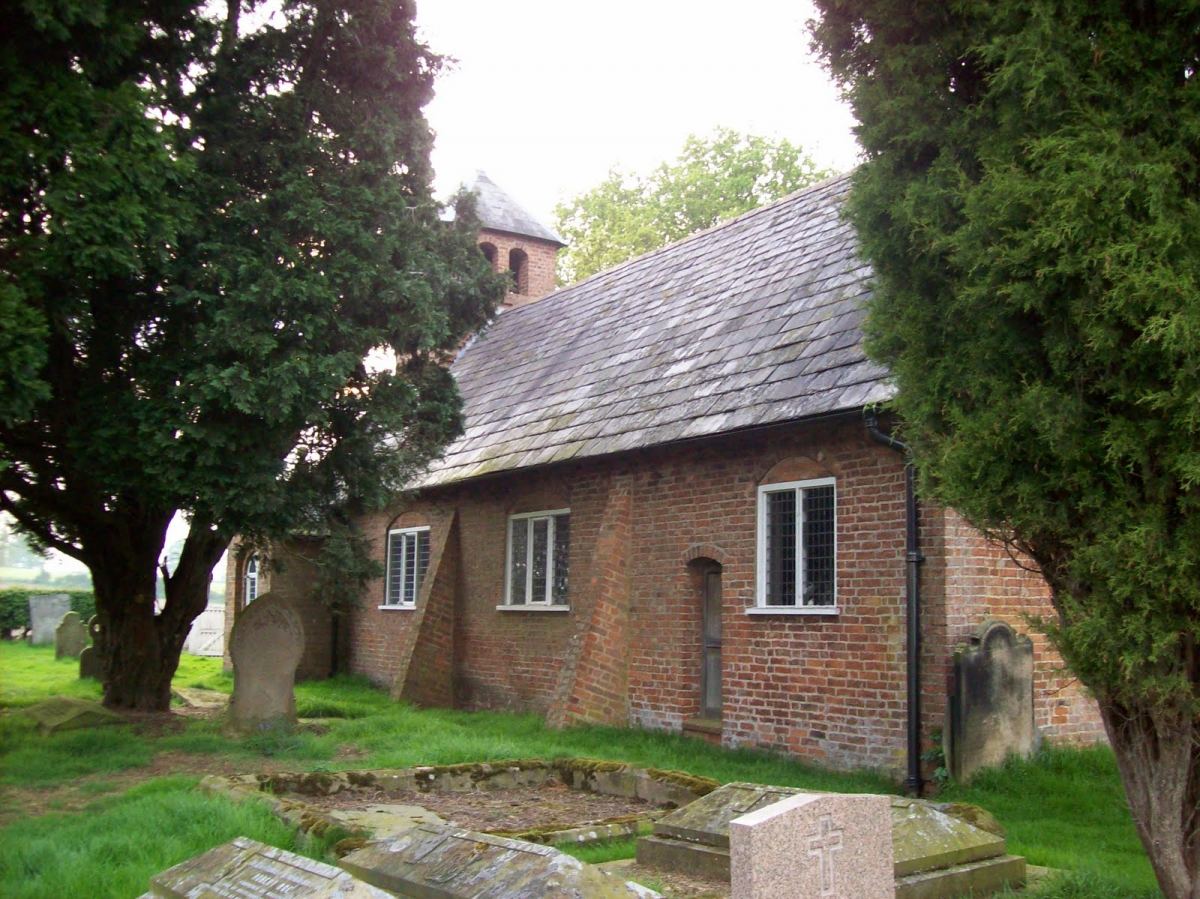
The chapel is built in brown brick with a grey slate roof. Its plan consists of a tower at the west end with an external staircase leading to an internal west gallery. The body of the chapel is in three bays without aisles; it is furnished as a nave and a chancel. A vestry projects south from the west bay of the nave. The tower is small with a pyramid-roof. It has a west door with a loophole above it, a plain band at the belfry floor level, paired camber-headed bell-openings and a weathercock.
The roof is unusual in that the sections between the principal beams are filled with carvings making a star-like pattern. All the chapel furnishings are made from Cheshire oak. The holy table dates from the 17th century, and on each side of it are panelled family box pews. On the wall above the south pew are three marble memorials to the Vernon and Murhall families, and above the north pew is a marble memorial to the Stephens family. Above the two east windows is royal coat of arms of George III. A low screen divides the chancel from the nave. The seating in the nave consists of plain seats and backs without any decoration. At the west end is a gallery which is reached by the external Staircase. The font is Jacobean in style, and the pulpit is a three-decker
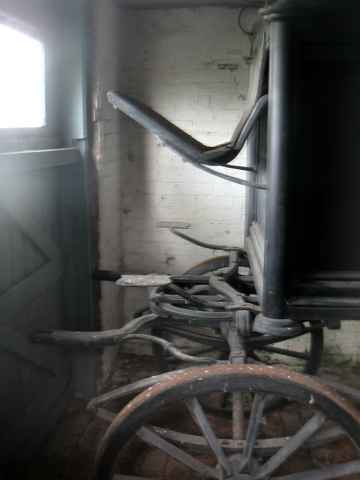
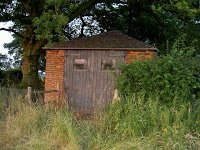
Along with the church and graveyard stands an old garage which houses what is probably one of the best Victorian horse drawn hearses in existence. It is here our ghostly tales begin. This hearse has often been reported to be heard making a spectral journey at night. People have checked, but the hearse remained still in its home, although the sounds continued. It is built of brown brick with a pyramidal roof of grey slates and is dated 1822. The hearse-house is a Grade II listed building.
This is certainly a place to visit in the summer, or when rambling in the area. The Church is very beautiful, the scenery around is an artist’s dream.
I once noticed in Stephen Grey – YouTube’s Anglo Celtic Metal Detecting add some images on social media. I thought I recognised the site, and lo, it was indeed the fields surrounding Old St Chad’s. I remember he had multiple Victorian coins and several medieval hammered, how jealous was I?



[…] fantastic historic location that I discovered is in the same parish Old St Chad’s in the scattered community of Tushingham in the civil parish of Tushingham-cum-Grindley, Macefen […]
Very interesting. I just walked this route today in glorious sunshine and as mentioned in this article the scenery is idyllic. Also, there was not a soul about, giving it a mysterious, timeless feeling. I was following directions and a map in a book called Mysterious Cheshire, by Tony Bowerman, from 1990, and it was difficult to find the correct path. Although 1990 feels ‘recent’ to me (ha!) it is 35 years ago, and paths and gates might have changed. I walked past the old chapel and downhill through a farmer’s field (Called Hollywell Ridding, apparently) that I probably shouldn’t have walked through, and headed towards the diagonal corner on a hunch, but it ended in a tangle of undergrowth and small copse. I read in the book afterwards that It might be somewhere around where the site of an ancient pond was (or still is). ‘The name hints at early Celtic water worship at a holy well or spring’, he says. ‘This may have been a sacred site long before the Romans came’. I walked back up around the edge of the field and eventually found a path through the maize/corn, and found the metal gates – now back on track, I think, turned right along an open field but then lost the way after that as I suspect a style might have been taken away and any signs of a path also. Anyway, it was definitely a bit of ‘mysterious Cheshire’.