
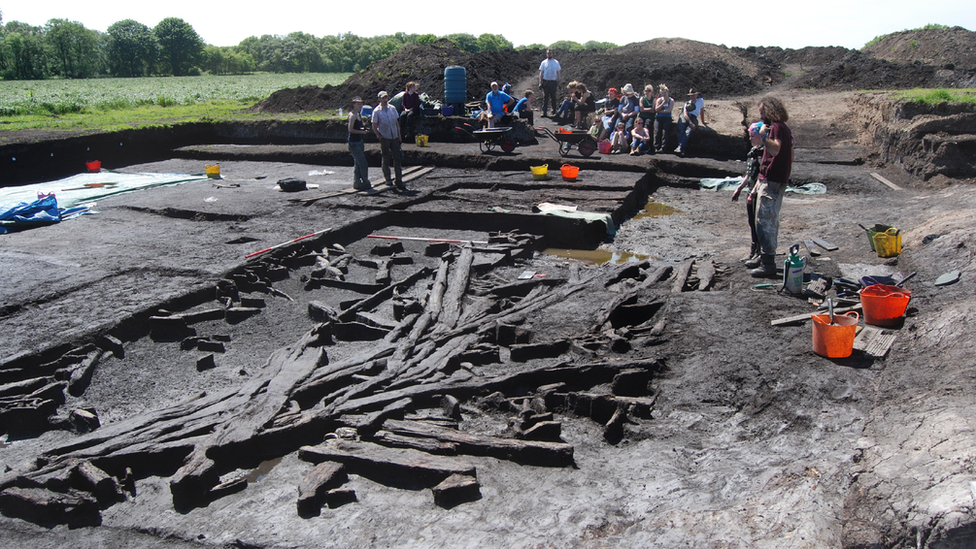
A reinterpretation and analysis of Star Carr, England, will examine and discuss the evidence and interpretations of the site and its deposition assemblage, focusing on the Red Deer antler headdress votive offerings, discovered within the lake (Conneller, Milner, Taylor, Taylor, (2012), 1006), (Cattling, (2013). Star Carr is an Early Mesolithic settlement site, located near Scarborough, England and is dated to c. 9000 Cal BC (Conneller, Milner, Taylor, Taylor, (2012), 1004). Excavations and interpretations at Star Carr, were undertaken in 1949-1951 and 1952-1953, by Graeme Clark, where barbed antler points, red deer frontlet masks, antler mattocks and bone scrapers were discovered (Conneller, Milner, Taylor, Taylor, (2012), 1006), (Cattling, (2013). Further excavations at the lakeshore was undertaken in 1975 and 1985, prior to the Seamer Carr Development and further excavations in 1985 and 1989, produced a large amount of Mesolithic settlement activity. Further excavations were undertaken in 2004 and 2010, of Clark’s original excavations, for re-analysis and re-interpretation (Cattling, (2013). Through the many excavations of Star Carr, it was possible to re-examine and re-interpret the many archaeological features and evidence of this Mesolithic settlement, which was understood to be extremely important and a substantial settlement, than was first interpreted. However, through new excavations and the re-analysis of finds, of which were firstly interpreted as unimportant, were, in fact, of substantial importance (Cattling, (2013), (Conneller, Milner, Taylor, Taylor, (2012), 1006-17).
-
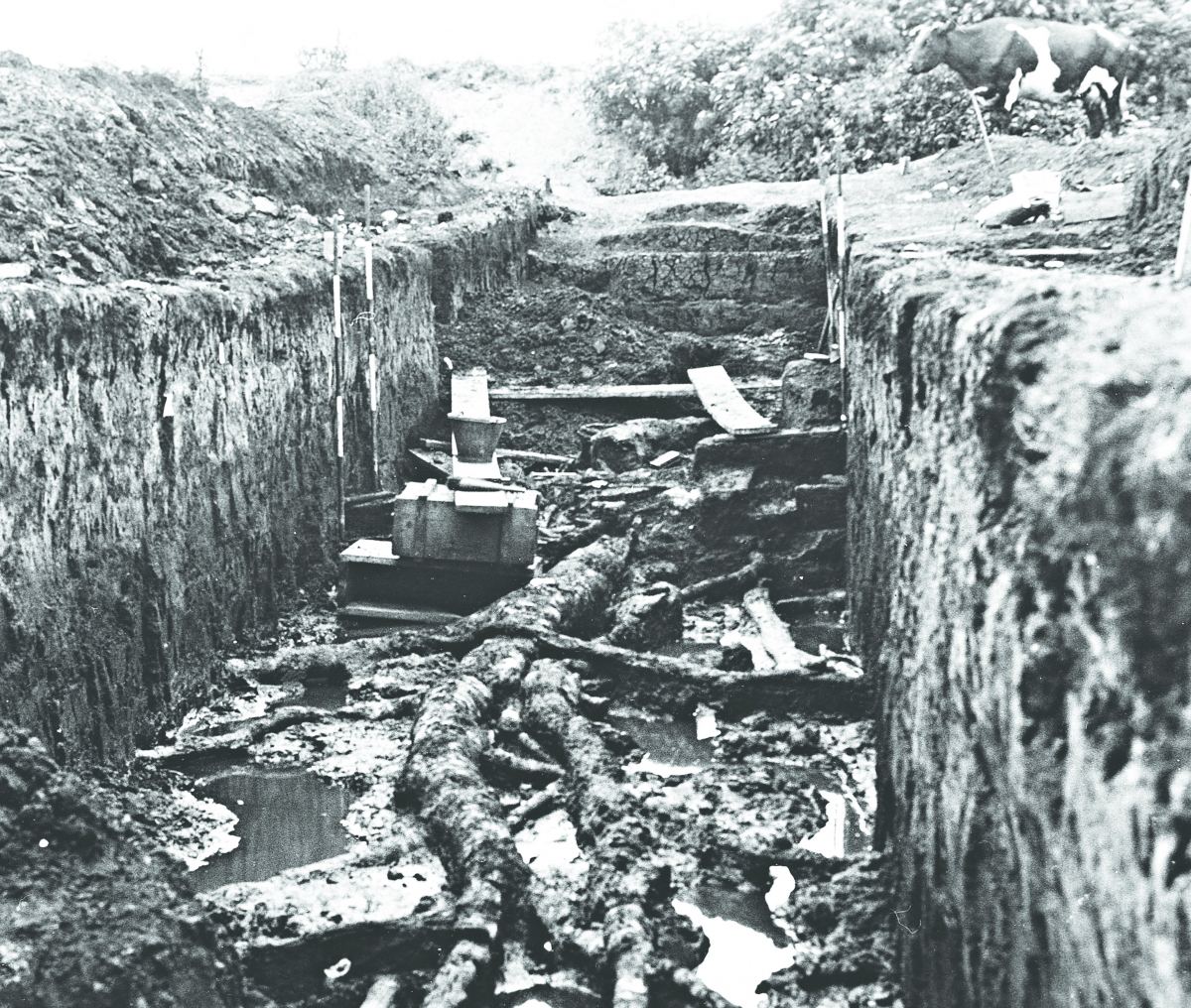
- Graeme Clark’s excavations of 1949-51
Graeme Clark’s excavations in 1949-51, discovered pieces of worked flint, within an area of 18m by 18m and worked timber, constructed as a platform. Clark’s interpretation of the site was a small seasoned camp, occupied by a small community. Clark also recovered bone scrapers, antler mattocks, barbed antler points and most importantly, red deer frontlet masks (Conneller, Milner, Taylor, Taylor, (2012), 1006-7). Excavations between 2004 and 2010,clarified the recovery of the worked flint flakes and was of a greater quantity of 358 pieces per square meter, therefore producing evidence of a highly substantial settlement than was firstly interpreted, possibly up to eighty times greater the scale. The worked timber platform was located parallel to the lakeshore. Clark’s interpretation of the timber platforms was disregarded and was interpreted as unimportant. An excavation in 2007-2008, revealed eight thousand lithic artefacts of worked flint, two hundred and ten pieces of animal bone and a depression of 3m in diameter and 20cm deep, filled with a dark coloured sediment. This depression was surrounded by eighteen postholes, of a curvilinear alignment of 4m (Conneller, Milner, Taylor, Taylor, (2012), 1010-12), (Cattling, (2013). Through re-examinations and re-excavations of the timber platforms, it is possible, these platforms were flooring for huts or even substantial buildings. It is possible Star Carr was occupied continuously, not seasonally, for many years. These substantial buildings possibly had taken many man-hours and effort to construct and were extremely significant and of importance to the Mesolithic community, in comparison to Neolithic stone monuments, Mesolithic monuments were possibly constructed of timber (Malone, (2011), 16), (Conneller, Milner, Taylor, Taylor, (2012), 1015-17).
-
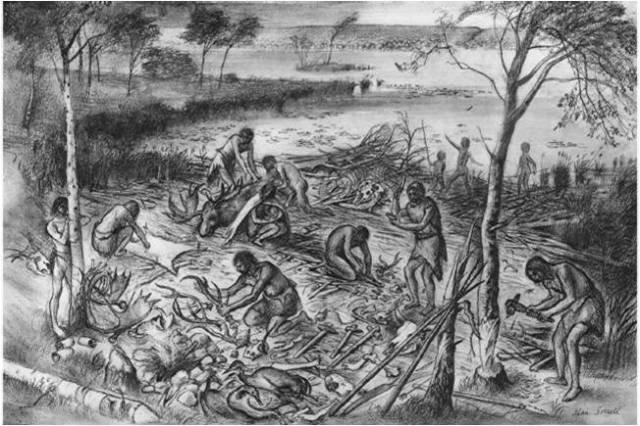
- Mesolithic shamanism?
The formal depositions of the twenty-one red deer antler headdresses, discovered as votive offerings, placed within the lake water, was of the greatest importance. This area of the lake was regarded as a highly significant and ritualistic area, through the evidence discovered of the frequent reuse of that particular point of the lake (Conneller, Milner, Taylor, Taylor, (2012), 1017). Star Carr specifies the largest assemblage of bone and antler artefacts to date. Graeme Clark’s interpretation of the red deer frontal headdresses, was of a ritualistic technique of hunting, to enable the wearer to become closer to their prey (Cattling, (2013), (Willerslev, (2004), 635).
-

- Starr Carr Deer Antler Head dress
Animism or animalistic techniques is the relationship between humans and animals and the ontology of their world and their relationship processes (Harris, Robb, (2012), 668). Animals were highly regarded as a possible equal status as humans and were extremely valuable as provisions for nutrition, clothing and tools (Malone, (2011), 16-17). Animals were also regarded as ancestral links to humans. All living creatures had a soul (Ingold, (2000), 44-45, 48-49), (Harris, Robb, (2012), 670). It is possible, the human interaction with animals was a hunting technique through the utilisation of their skins, in the case of the red deer, the utilisation of antlers to assist hunters to metamorphous into a red deer. This technique was to possibly allow the hunter to become closer to his prey, however, it is possible, this technique allowed the human to transform into a red deer, through their beliefs of spiritual nature and become a red deer (Harris, Robb, (2012), 670). The deposition of animal remains, of votive offerings and internment depositions illustrates pre-historic communities and their relationships with animals, of which is possibly a highly complex ritual practice.
-
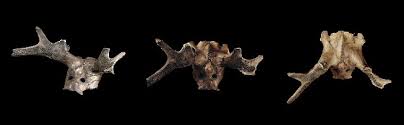
- Star Carr antler headdresses seen from the front and above – picture from the British Museum.
Clark interpreted the deposition of the twenty one antler headdresses, discovered on his 1952-53 excavation of the site, as worked skulls possibly adorned as masks or headdresses, utilised in hunting techniques, to allow the hunter to obtain closeness to his prey, however, they were also possibly worn in ritual or dancing practices (Catliling, (2013). The reinterpretation of the antler depositions investigated the possibility of this interpretation. It is possible, the deer headdresses was a sacrifice to the spirit world as an acknowledgement for the provisions of nature and the belief of the implications of cosmological rituals and ontology (Lewis-Williams, Pearce, (2005), 100), (Outram, Stear, Kasparov, Usmanova, Varfolomeev, Evershed, (2011), 120), (Piggott, (1958), 239). Evidence of fourteen red deer was also discovered at Knowe of Ramsay, however, the deer were depositioned as a funerary internment, although possibly an offering to the ancestors (Piggott, (1970), 247). Ancestors were believed to be connected to the living through ritual practices and offerings (Whitley, (2002), 122). It is highly possible, these headdresses were utilised in hunting practices to allow the hunter to obtain an appearance as the red deer and through the imitation of the deer, and the hunter is able to become closer to his prey. The hunter believes he is transformed into the deer through animalistic behaviour and beliefs (Willerslev, (2004), 635) and was depositioned within the lake as a ‘Thank You’ to the ancestors and nature. Antler bones were regarded as memories of the deceased animal and were metamorphosed into a natural process of regrowth, through the shedding and annual regrowth of the animal; this was highly regarded within the community. Malawian communities believed in a cycle formation of life processes between the living and the dead. It is possible, the votive offerings of antler headdresses was a ritualistic offering or rebirth and regrowth as a belief of the process of life overshadowing death as a continuing process (Wilkin, (2011), 70, 75), therefore, the headdresses were utilised in important social occasions and rituals (Johnston, (2011), 281).
Thanks to Alison Smith for making her work available. If you would like to offer your work to Arch MD Mag, please email editor@archmdmag.com
To keep up to date with all our news, you can get our free Android app by clicking here.
Alternatively our iOS app is available free from the appstore here
References.
Cattling, C. (2013). Return to Star Carr: Discovering the true size of a Mesolithic settlement. Accessed 26th November, 2014 from http://www.archaeology.co.uk/articles/return-to-star-carr-discovering-the-true-size-of-a-mesolithic-settlement.htm
Conneller, C., Milner, N., Taylor, B., & Taylor, M. (2012). Substantial settlement in the European Early Mesolithic: new research at Star Carr. Antiquity, 86:334, 1004-1020.
Harris, O., J., T., & Robb, J. (2012). Multiple Ontologies and the Problem of the Body in History. American Anthropologist, 114:4, 668-679.
Ingold, T. (2000). The Perception of the Environment. London, England: Routledge.
Johnston, R. (2011). Later Prehistoric Landscapes. In Joshua Pollard (Ed.), Prehistoric Britain. Oxford, England: Blackwell Publishing. (pp. 268-287).
Lewis-Williams, D., & Pearce, D. (2005). Inside The Neolithic Mind. London, England: Thames & Hudson Ltd.
Malone, C. (2011). Neolithic Britain and Ireland. Stroud, England: The History Press.
Outram, A., K., Stear, N., A., Kasparov, A., Usmanova, E., Varfolomeev, V., & Evershed, R., P. (2011). Horses for the dead: funerary foodways in Bronze Age Kazakhstan. Antiquity, 85:327, 116-128.
Piggott, S. (1970). The Neolithic Cultures Of The British Isles. Cambridge, England: Cambridge University Press.
Piggott, S. (1958). The Excavation of the West Kennet Long Barrow: 1955-6. Antiquity, 32:128, 235-242.
Whitley, J. (2002). Too many ancestors. Antiquity, 76, 119-126.
Wilkin, N., C., A. (2011). Animal Remains from Late Neolithic and Early Bronze Age Funerary Contexts in Wiltshire, Dorset and Oxford.The Archaeological Journal, 168, 64-95.
Willerslev, R. (2004). Not Animal, Not Not-Animal: Hunting. Imitation and Empathetic Knowledge among the Siberian Yukaghirs. Royal Anthropological Institute of Great Britain and Ireland, 10:3, 629-652.





Leave A Comment