

In the Celtic days, Britain was a Pagan country – and one of the most important celebrations was Samhain, or the Feast of the Dead.
Samhain is typically celebrated from sunset on October 31 to sunset on November 1, almost halfway between the autumn equinox and the winter solstice.
It was one of eight Gaelic festivals along It is one of eight annual festivals commonly celebrated by pagans of various traditions, along with Imbolc, Ostara, Beltane, Midsummer, Lughnassad, Mabon and Yule and was widely observed across Ireland, Scotland and the Isle of Man.
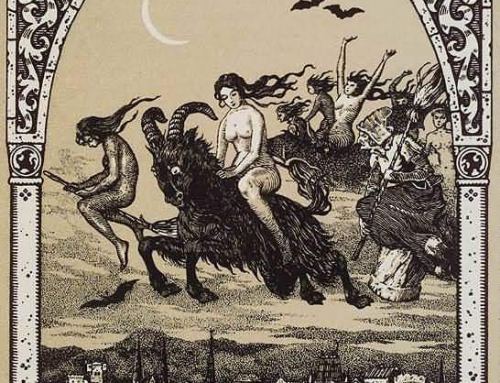
Celts believed that on this day, the worlds of the living and the dead became blurred – and ghosts returned to earth.
But the pagans didn’t fear the dead, and Samhain was a time for Druid prophecies.
Samhain marked the end of the summer and harvest in Britain, Ireland and northern France and the beginning of winter, a time of year often associated with death.
Many Pagans also celebrate it as the old Celtic New Year (although some mark this at Imbolc).
In the eighth century, Pope Gregory III made November 1 a day to honour saints and martyrs.
To keep the peace with the pagans, he made sure All Saints’ Day incorporated some of the traditions of Samhain.
Celts believed that on this day, the worlds of the living and the dead became blurred – and ghosts returned to earth. Not only did the Celts believe the boundary between the worlds of the living and the dead dissolved on this night, they thought that the presence of the spirits helped their priests to make predictions about the future.
Death also symbolises endings and Samhain is therefore not only a time for reflecting on mortality, but also on the passing of relationships, jobs and other significant changes in life. A time for taking stock of the past and coming to terms with it, in order to move on and look forward to the future
They would build huge sacrificial bonfires and people would gather to burn crops and animal sacrifices as well as put on costumes to ward off evil spirits and ghosts. Costumes often consisted of animal heads and skins.
After the festival they re-lit the fires in their homes from the sacred bonfire to help protect them, as well as keep them warm during the winter months.
The name Halloween is a contraction of All Hallows’ Evening which is also referred to as All Hallows’ Eve or All Saints’ Eve – the eve of the Christian feast of All Hallows’ Day, which is better known as All Saints’ Day.
The word Samhain is Irish Gaelic for “summer’s end”. It is usually pronounced “sow-in” with the “ow” following the same sound as “cow”. There are some regional dialects of it though which include “sow-een”, “sowin” (with the “ow” similar to “glow”). The Scots Gaelic spell it Samhuin or Samhuinn.
Bring back Samhain celebrations. They aren’t commercialised and full of claptrappery!

Leave A Comment