
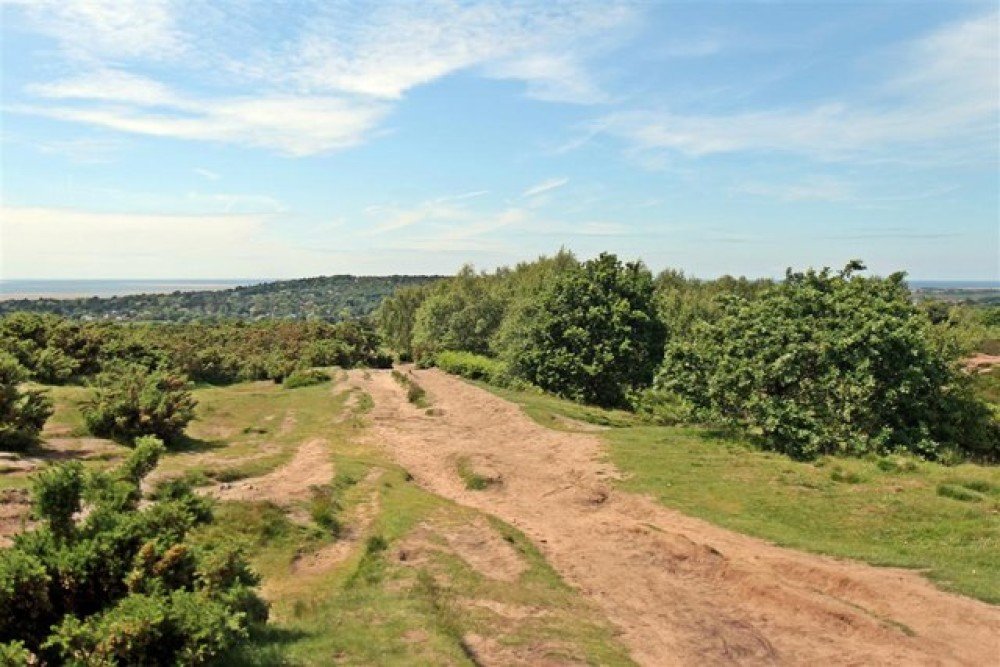
Thurstaston is a village on the Wirral Peninsula, Merseyside, England. It is part of the West Kirby and Thurstaston Ward of the Metropolitan Borough of Wirral and the parliamentary constituency of Wirral West. The village lies on the A540 road between Heswall and Caldy, although it extends some distance down Station Road to the Wirral Way and the River Dee estuary.
-
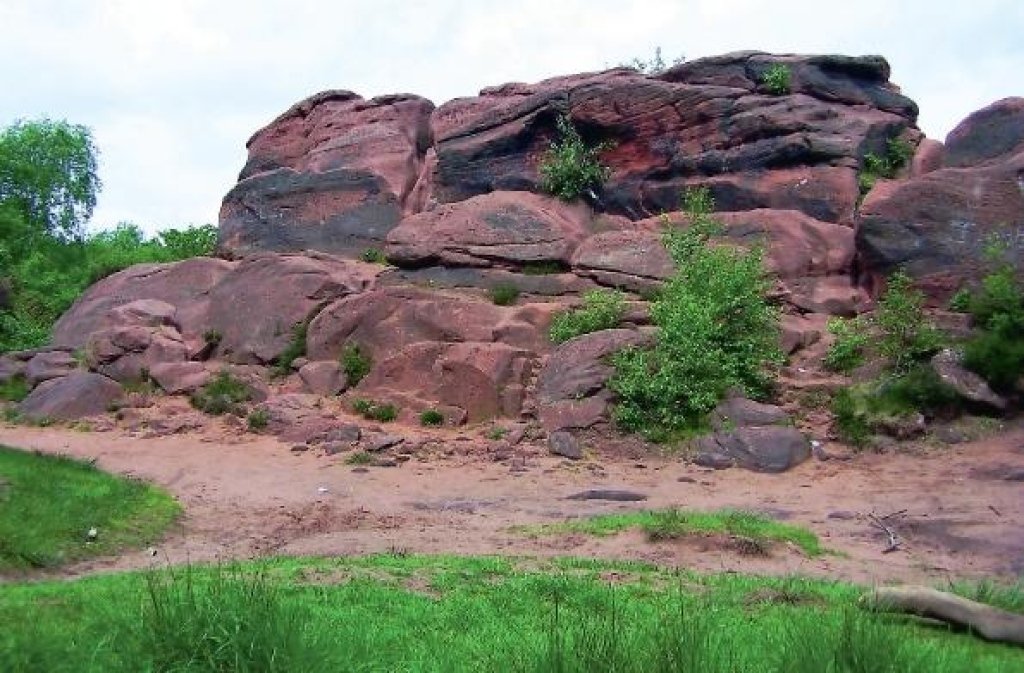
- Thor’s stone on the common
Thurstaston is not just a nice name, it is a name of much debate – how did it get its name? Lying on the Deeside of the Wirral peninsula, Thurstaston’s marshes are regularly filled by the Dee. Thurstaston Hill, a 298-foot (91 m) Triassic sandstone ridge on which lies Thors Stone. The name Thurstaston is probably derived from “Thorsteinn’s ton”, Thorsteinn being a Viking name and “ton” being Old Norse for a farmstead or settlement. The more romantic of the local legends comes from “Thors stone town”, relating to Thors stone, a large sandstone block on the nearby common, its name remembering the Norse god Thor.
The Wirral has a large Viking heritage, and with the common being a high point in the landscape it is not uncommon for the area, and the stone, to be hit by lightning during storms. The Viking settlers interpreted this phenomenon as the god Thor striking the stone in anger with his warhammer. Not surprisingly, they held their religious ceremonies here on the common.
This huge sandstone piece was allegedly used by the Wirral’s early Norman settlers, as an altar and place of human sacrifice. Here in the 1930’s, a witch’s coven were found performing their sabbatical rights, this was revived in the early 1980’s, but local residents and police put a quick stop to this worship.
A Viking settlement called Straumby once existed in Tinker’s Dale, near the modern-day Thurstaston Visitor Centre.
-
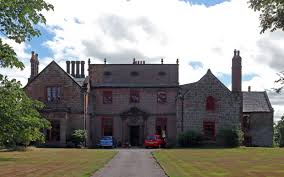
- Thurstaston Hall
Thurstaston is mentioned in the doomsday book, its name then being “Turastaneton”. Thurstaston Hall dates from the 1300’s, and has passed down through the generations for nearly 600 years; the current owner has traced his ancestry all the way back to these times. The ruins of an earlier hall have also survived to this day.
The hall has its share of ghosts, a white lady has been well documented in many books on the paranormal, the figure has been seen many times in the west wing bedrooms, appearing to be distraught, wringing her hands, and looking for something.
The story behind this haunting tells of the lady of the manor, possibly a Glegg, who killed her infant son, and upon being disturbed, dropped the knife. When the knife was finally found by one of her servants, she was tried, and brought to justice; she continues to search for the weapon, in order to escape her punishment of execution. The white lady was last seen in 1980, when a team of archaeologists from Liverpool University, witnessed the phantom in one of the halls’ many windows.
In August 1971, a team of water board workers stumbled upon a tunnel, whilst laying new pipes, but were scared witless by the screaming emanating from within. The tunnel appeared to be an old smugglers tunnel, the noises – who knows?
-
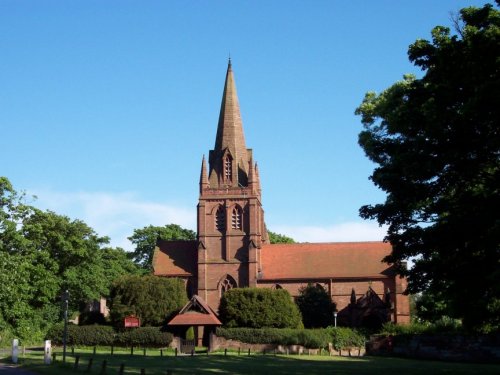
- St Bartholomew’s Church
St Bartholomew’s Church is Thurstaston’s church, it is recorded in the National Heritage List for England as a designated Grade II* listed building.
The earliest mention of a Church occurs around 1125 but other evidence suggests that one may have existed in Saxon times. The Norman church endured for many hundreds of years but was eventually taken down in 1820 and a second edifice, a plain stone building, was completed in 1824. In 1871, the executors of Joseph Hegan of Dawpool set apart £4,500 for a new church to be erected in his memory. This was designed in late-13th-century mid-gothic style by John Loughborough Pearson, also the architect of Truro Cathedral, and was built entirely of local sandstone. It was consecrated in 1886. Although nothing remains of the earlier Norman church, the tower of the second one still stands in the churchyard and the sandstone of the building was used to construct a wall enclosing the new churchyard.
-
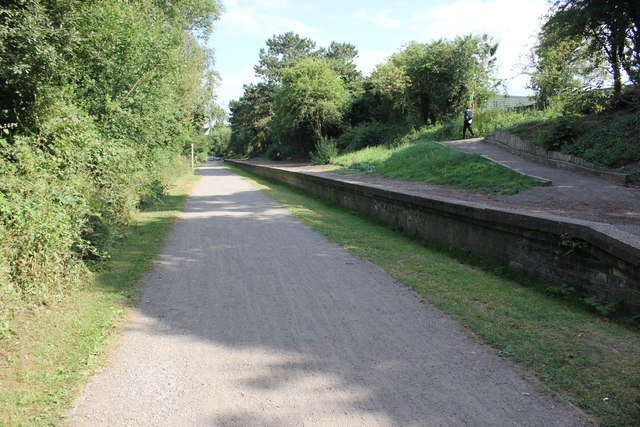
- The Wirral Way at Thurstaston. Site of the old station.
Thurstaston is notable for the large areas of parkland and heathland. Thurstaston Common is a Site of Special Scientific Interest (SSSI) and a local nature reserve.. The offices and a visitor centre of Wirral Country Park are near the site of Thurstaston railway station. The former trackbed of part of the Birkenhead Railway has been converted into a public footpath – the ‘Wirral Way’. The visitor centre contains displays relevant to the local ecology.
Back to the common and we will throw a little bit more folklore into the story. this has to be one of the Wirral’s most frequented places for ghosts, the nocturnal visitors are often found roaming the common; In the gullies that run from the high ground to the sea, the spectres of smugglers, who were killed by excise men in their struggles to escape justice, their howls can be heard on dark, stormy nights; The day trippers, who have stumbled and fallen down the steep embankment on the common western side, screaming for help; and the many people found hanged here from suicide, have been seen swinging from the birch trees that grow here.
I have an affinity with Thurstaston. As a 15 year old my whole school did a 12 mile sponsored walk along the Wirral way. I walked the route numerous times as an adult and took part in many astronomical sky watches thanks to the lack of light pollution.
When my Dad passed away in 2002, I reflected in the solitude on a bench over looking the Dee Estuary. Thurstaston is one of my favourite places and a stunning place.


Leave A Comment