
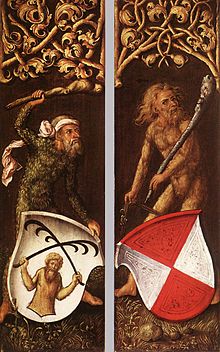
The “Wild Men of York” are a fascinating and mysterious part of local history in the city of York, England. These legendary figures, often depicted as untamed, hairy men who lived in the woods and the wilderness, have intrigued both historians and folklorists for centuries. They are part of the broader tradition of wild men or “wodewoses” found in European mythology, a symbol of primal human nature and the mysterious forces of nature. However, the Wild Men of York are particularly notable for their association with the medieval and early modern period.
The Wild Men of York are said to have lived in the dense forests surrounding the city during medieval times. The wild man myth likely emerged from a combination of local folklore and European traditions. These figures were described as large, shaggy, and covered in hair, often with an unruly or fearsome appearance. They were sometimes portrayed as being either entirely human but living outside of society or as beings who were a strange mix of both human and animal.
In the context of York, the wild men were often linked with the city’s history of forested areas, such as the ancient Sherwood Forest, and later with the northern wilderness that extended beyond the city’s urban landscape. Legends varied, but the Wild Men were usually depicted as living on the fringes of human society, embodying the untamed forces of nature that civilization sought to tame.
The concept of the wild man was not unique to York. In medieval Europe, wild men were a common motif in art and literature. These figures often appeared as symbols of the untapped and chaotic forces that were to be controlled by society. They were sometimes seen as figures of both fear and fascination, representing a return to a primal state.
In York, the Wild Men could be found in various forms of expression, from carvings on the city’s churches to references in local tales. For example, the famous carvings on the medieval Minster’s walls depicted several wild men with long beards, naked bodies, and shaggy hair. These carvings were often used to convey the tension between the untamed natural world and the civilizing influence of Christianity and societal order.
One of the most famous stories of a wild man in York involves a figure named “The Wild Man of York,” who was said to have been captured in the 15th century. According to local legend, the wild man was discovered living in the woods near the city. He was reportedly covered in hair, wild in appearance, and unable to speak. Some versions of the story even suggest that the wild man had been raised by wolves or other animals, making him a true “feral child.”
Once captured, the wild man became a source of curiosity and wonder for the people of York. He was paraded through the streets and exhibited to the public, where he was said to have been both admired and feared. Some accounts state that he was eventually “tamed” and even integrated into society to a degree, though whether this was an exaggeration or a genuine part of the story is unclear.
The tale of this wild man may have been rooted in the discovery of a real person, but it could also be symbolic of the broader anxieties about the boundary between civilization and the natural world. As these wild men were displayed in public, they became part of a social spectacle, often representing the “other” in society—those who lived outside the law and customs of the city.
In York, as in other parts of medieval Europe, the wild men were more than just literal beings; they carried deep symbolic weight. Wild men were often connected with the concept of wilderness, both as a physical space and as an ideological construct. They were associated with the untamed world, a realm that existed beyond the controlled, orderly spaces of towns and cities.
In York, these wild men were thought to represent both the dangers and the allure of the natural world. They stood as figures who defied social norms, but at the same time, they were often used in religious and cultural narratives to remind people of the importance of civilization, Christianity, and moral order. The wild men’s absence from the boundaries of society, combined with their eventual domestication or control, highlighted the tension between nature and civilization that was central to medieval life.
Though the Wild Men of York may not be as prominent in modern memory, their legacy still lingers in the cultural consciousness. Their images and stories have been revived in popular culture, particularly in the context of medieval reenactments, historical fiction, and folklore studies. These wild men continue to captivate the imagination as symbols of the unknown, the untamed, and the primitive aspects of humanity that remain just beneath the surface of civilization.
In contemporary York, remnants of the Wild Men can still be found in local art and in the occasional retelling of their stories. Visitors to the city can find carvings of wild men in various historical sites, and the myth of the Wild Man of York still serves as a reminder of the city’s deep ties to its medieval past.
The Wild Men of York remain an intriguing part of the city’s folklore and historical identity. These figures, who embodied both the untamed forces of nature and the fear of the unknown, provide insight into medieval attitudes toward wilderness and civilization. The wild men were not just creatures of myth, but reflections of the anxieties and hopes of the people who lived in a world that was constantly navigating the boundaries between the natural world and the human-made society. Through their stories, the Wild Men of York continue to remind us of our complex relationship with the wild, and the ways in which we have always sought to define, control, and sometimes embrace the forces of nature.



Leave A Comment