
Hale, Merseyside is famous for its quiet nature, cottages and countryside, but most of all for its most famous inhabitant who lived here more than 300 years ago. His name is John Middleton and was born in Hale in 1578, but is more commonly known as “The Childe of Hale”
John Middleton, reputed to have reached 9′ 3″ in height, was born in Hale in Lancashire in the 1570s; legend suggests that he was originally of normal size and grew in a single night. In 1617 his patron Sir Gilbert Ireland took him to the Court of King James I in London where he put out the thumb of the King’s wrestler in a bout, which feat is reported to have earned him the disdain of the courtiers and a gift of £20 from the King. Even before he was 20 years of age, his height reached a staggering 9 foot 3 inches…
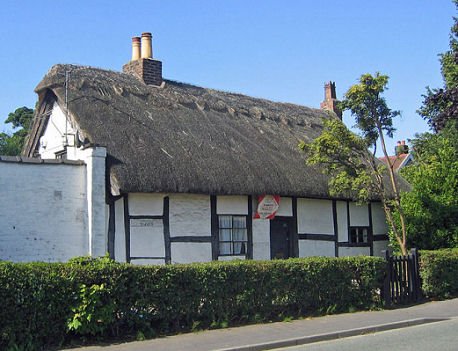
The Childe`s cottage still stands today, with its white washed walls and sloping thatched roof which has recently been re-thatched due to years of neglect. In the gable end which faces onto Church End/ Church Road, you can see two windows high up, these windows have legend about them that when the childe slept, he had to have each foot hanging out each window in order to lie the full length of the cottage asleep.
Little is known about his childhood, but there are many legends about him. One of these legends is still the talk of the village. One day by Hale lighthouse he sketched out on the sand an outline of a giant man bigger than himself. He then lay down within the lines of the sketch and went to sleep, wishing that when he woke up he would be the same dimensions of the giant sketch. Once he awoke he found himself to be of the same size of the giant drawing he had sketched out in the sand.
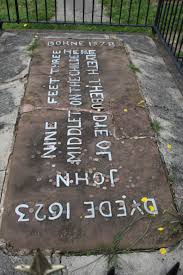
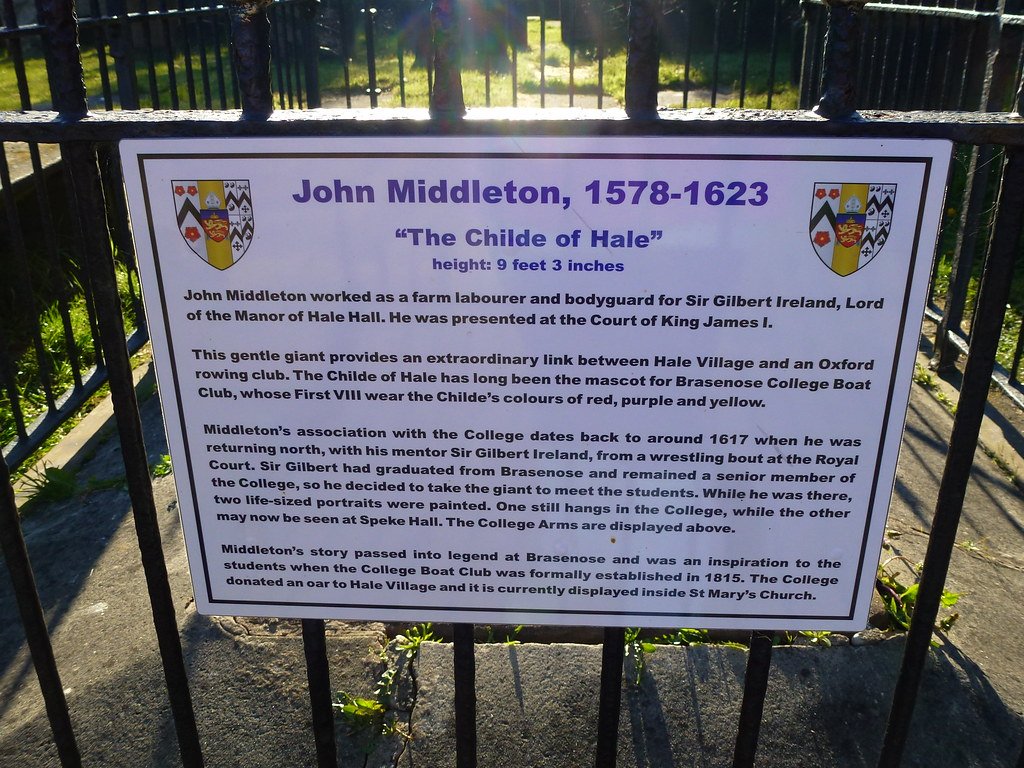
John Middleton died on August 23rd 1623, as entered into the Hale Church death register. His name is given and “Childe Of Hale” is written alongside in pencil. His grave lies on the south side of St Mary`s church surrounded by iron railings.
A close up of the Childe Of Hale’s grave reveals the inscription: Here lyeth the bodie of John Middleton the Childe Nine feet three Borne 1578 Dyede 1623.
In 1768 John Middleton’s remains were removed from his grave by the schoolmaster and Parish clerk, Mr Bushell. They were then taken to Hale Hall for preservation and were measured. It was during this that it was discovered that his thigh bones each stretched from the hip of an average sized man to his foot. His hands were also measured and found to be 17 inches from the carpus to the end of the middle finger and 8 and a half inches across the palm.
Later his remains were re-interred into St Mary`s churchyard in Hale, where they are now today.
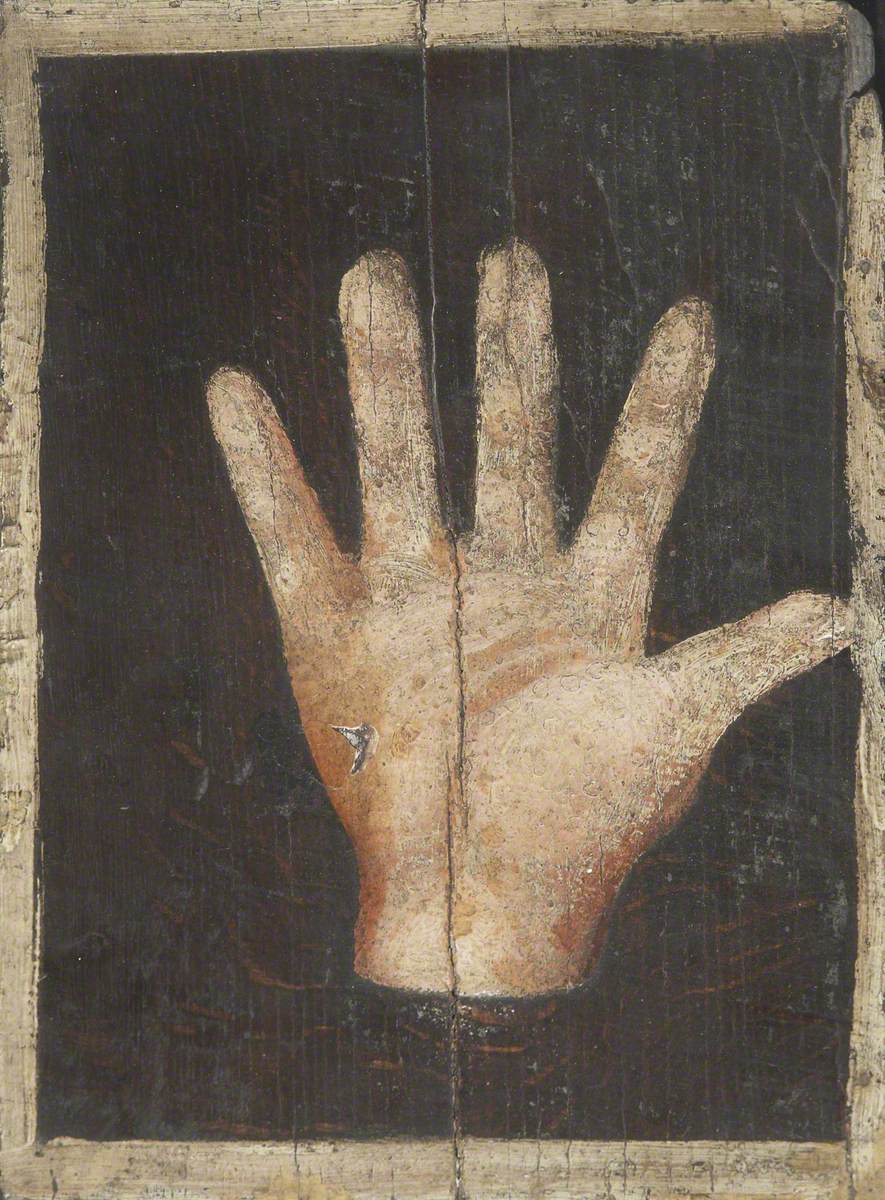
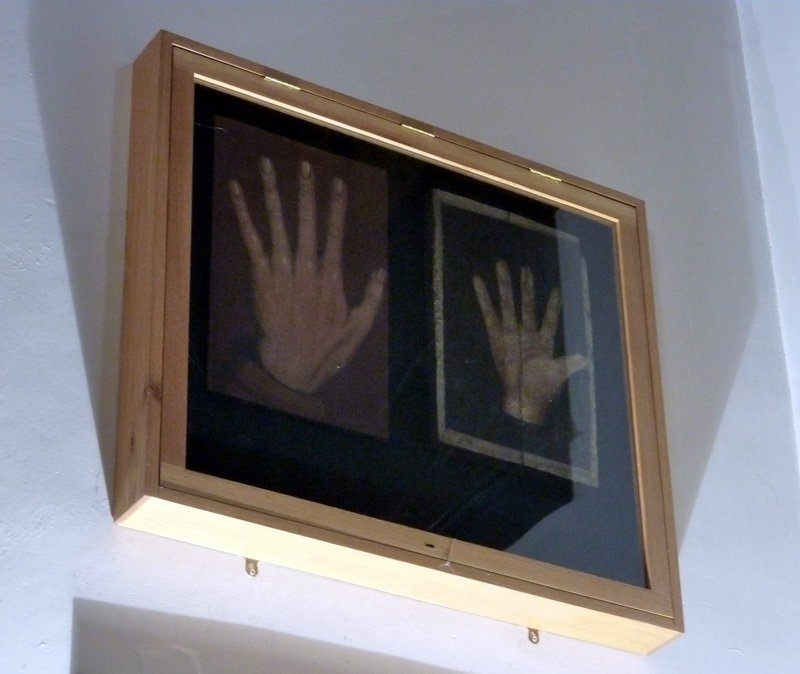
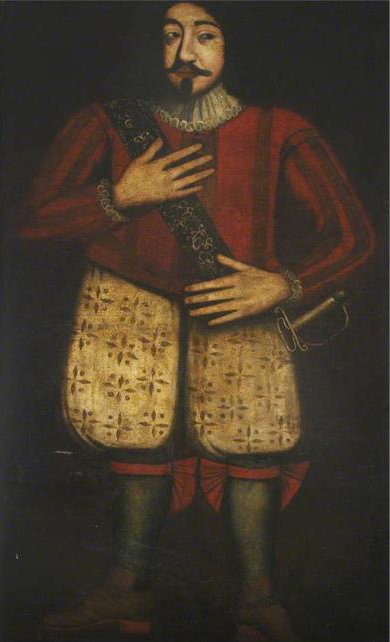
Brasenose College at Oxford has a portrait of Middleton in this dress and the painted outline of his hand. He has long been the mascot for the Brasenose college boat club.
The club’s colours are black and gold, with black blades. The 1st VIII, however, may wear the distinctive ‘Childe of Hale,’ colours – red, purple and yellow, which are synonymous with Brasenose rowing.
John Middleton’s association with the college originated when he was returning from a wrestling bout at Court in around 1617. His mentor, Sir Gilbert Ireland, Lord of the Manor of Hale, who graduated at the college and was a senior member there, took the giant to meet the students at Brasenose. It was there that two life-sized portraits were painted. One can be seen in Speke Hall while the other hangs in the college. When a boat club was formally established in 1815, Middleton’s story and tradition was used as an inspiration.
Sir Gilbert Ireland was probably at Brasenose; a man of that name had matriculated at the College in 1578. On the way home from London he and John Middleton visited the College, and there is a tradition that Middleton left an impression of his hand on a wall in the College. This is supported by an entry in Samuel Pepys’ diary for 9th June 1668: ‘to Brazen-nose College to the butteries, and in the cellar find the hand of the Child of Hales’.
A Fellow of the College, questioned in the 1930s, recalled that until the 1880s there was an outline of a hand on a gilt background on one of the door posts of the cellar door under the south side of Hall.
Displayed inside St Mary’s church is an oar donated by Brasenose College. If you ever visit Speke Hall, be sure to have a look at the giant portrait of John Middleton that hangs in the great hall too.
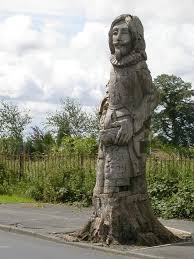
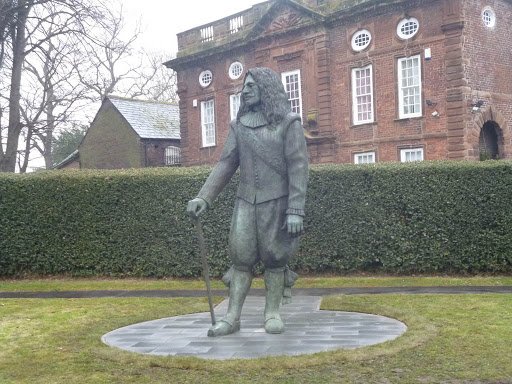
An old Elm tree once stood opposite St Mary`s church for many years, unfortunately it became diseased. Instead of removing it completely, it was decided to do something with it. Now there is a grand carving of the Childe Of Hale.
In 1882 edition of Ormerod’s History of Cheshire describes the ‘somewhat fantastic costume’ in which the Childe was dressed on his visit to London: ‘large lace ruffles about his neck and hands, a striped doublet round his waist, a blue girdle embroidered with gold, large white plush breeches adorned with blue flowers, green stockings, shoes, with red heels, tied with red ribbon, and wearing at this side a sword suspended by a broad blue belt over his shoulder, embroidered like the girdle’.
It is in this costume that the surviving portraits of the Childe depict him. Brasenose possesses one life sized portrait, two smaller paintings and two life-sized representations of his hands. Another life-sized portrait can be seen at Speke Hall in Liverpool, a National Trust property. The Childe is also depicted in a modern carving made from a tree stump opposite the churchyard in Hale.
The Brasenose VIII is always called ‘The Childe of Hale’. There is a punning reference to the name of the boat in the Brasenose Ale Verses for 1841, only four years after the official beginning of the College races at Oxford:
“Yes, Childe of Ale, well named, you too can tell. The virtues of that beer you love so well; While with nice skill, and mixture true, you float, Beer for the crew, the water for the boat”
To keep up to date with all our news, you can get our free Android app by clicking here.
Alternatively our iOS app is available free from the appstore here



Leave A Comment