

Saint Francis of Assisi, born Giovanni di Pietro di Bernardone in 1181 or 1182, was an Italian Catholic friar and preacher who left an indelible mark on both the religious and cultural landscape of medieval Europe. Renowned for his boundless love for all of God’s creations and his radical approach to Christian teachings, St. Francis is an enduring figure whose legacy extends far beyond his lifetime.
Born into a wealthy merchant family, young Francis enjoyed a carefree and indulgent lifestyle. However, his life took a transformative turn when he experienced a series of visions and divine revelations. Guided by a newfound spiritual fervour, Francis abandoned his affluent upbringing, choosing instead a life dedicated to poverty, humility, and service to God.
In 1209, Francis received approval from Pope Innocent III to establish the Order of Friars Minor, commonly known as the Franciscans. The order, rooted in principles of poverty and simplicity, attracted followers who sought a radical expression of Christian discipleship. The Franciscans played a crucial role in the renewal of the Catholic Church during a period of societal upheaval.
One of the most celebrated aspects of St. Francis’s legacy is his profound connection to nature. In his renowned work, “Canticle of the Creatures” or “Laudato Si’,” Francis expressed his deep appreciation for the interconnectedness of all living things. He saw nature as a mirror reflecting the divine, referring to the sun, moon, and even death as “brother” and “sister.” This early environmentalism and reverence for the natural world have resonated through the centuries, earning St. Francis recognition as the patron saint of ecology.
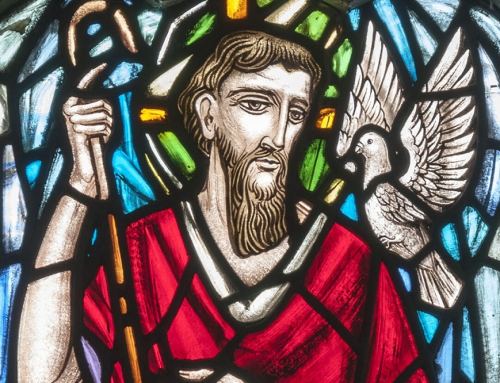
St. Francis’s compassion extended beyond humans to embrace all creatures, earning him the affectionate moniker “Il Poverello,” or “The Little Poor Man.” Legends tell of his ability to communicate with animals and birds, emphasizing his belief in the sanctity of all life. His teachings emphasize humility, kindness, and a sense of brotherhood that transcends species boundaries.
Numerous miracles were attributed to St. Francis during his lifetime. From healing the sick to taming ferocious wolves, these stories underscored his closeness to the divine. Following his death in 1226, Francis was canonized as a saint just two years later, a testament to the profound impact he had on the spiritual consciousness of his time.
St. Francis’s life has inspired countless works of art, literature, and music. The iconic image of him preaching to birds or receiving the stigmata has been captured by renowned artists like Giotto and Caravaggio. The enduring appeal of his story is evident in the numerous biographies, films, and theatrical productions dedicated to his life and teachings.
St. Francis’s legacy endures not only within the Catholic Church but also in broader cultural and religious contexts. His emphasis on humility, compassion, and environmental stewardship has found resonance in modern movements advocating for social justice and ecological awareness.
Pope Francis, who took his papal name in honour of St. Francis of Assisi, continues to draw attention to the saint’s teachings. In his encyclical “Laudato Si’,” Pope Francis addresses contemporary environmental challenges and underscores the need for a renewed ethical and spiritual approach to our relationship with the planet.
St. Francis of Assisi’s enduring appeal lies in his radical interpretation of Christian values, emphasizing love for all of God’s creation. From the humble town of Assisi to the far reaches of the modern environmental movement, the legacy of St. Francis lives on, inviting people to contemplate their relationship with the divine, each other, and the natural world.




Leave A Comment