

A study based on: The History of The University of Cambridge and of Waltham Abbey with the appeal of the injured innocence (referring to ‘The Church History and the History of Cambridge’) by Thomas Fuller after the inter-regnum c. 1690.
The low condition of Cambridge at the Conquest AD106
‘At this time the fountaine of learning in Cambridge was but little and at that very troubled.’ King William, with the intention of overpowering Ely made Cambridgeshire his seat of war.
Henry Beauclerk (son of William the Conqueror) bred in Cambridge; probably a benefactor to the University AD1080
Being a military man William was not overfond of ‘learning’, yet it appears that his son, Henry, who inherited the English throne from his brother William Rufus, had received an education at Cambridge, which had a reputation for ‘eminence for literature’. ‘Henry was here brought up in the study of arts and sciences…and afterwards travelled beyond the seas.’ He was said to be in Paris when he received the news of his brother’s death. He must have continued to study on his travels, his exemplary education earning him the title ‘Beauclerk’ or ‘good scholar’. In 1088, Roger of Montgomery ‘most mischievously with fire and sword destroyed the town and county of Cambridge, spoiling the poor subjects.’ The attack was in revenge of the killing of William Rufus and resulted in the abandonment of ‘the University’. On gaining the throne, Henry restored Cambridge as a seat of learning and showed gratitude to the town for the education he had received there by endowing ‘Readers of several languages therein.’
Cambridge first made a Corporation AD1101
King Henry I bestowed many privileges on the town of Cambridge in order to repair the damage done by Montgomery. ‘The University is so far from repining, she rejoiceth thereat. For well may the jewel delight to be put in a handsome cabinet.’ Henry freed the town from martial power and created a corporation. Previously, the ferry over the river Granta had been unofficial and consisted of many crossings, now it became fixed near Cambridge ‘which brought much trading and concourse of people thereunto.’
The original of Midsummer Fair AD1103
There are many villages within the precincts of Cambridge. Barnwell translates to ‘children’s well’. At this time the eve of St John the Baptist coinciding with Midsummer presented an opportunity for small celebration. Perhaps the event began as a communal baptism ceremony, as it is recorded that on this particular eve, ‘many little children met there in mirth to play and sport together’. As the annual gathering became more popular, so whole families came to watch the spectacle. Refreshments, originally simple picnics, became provided from ‘victualling-booths’, and it is supposed that Pedlars with toys and ‘trifles’ were soon to take advantage of this captive trade. In time, small trade swelled, and the ‘tradesmen’s stalls of commodities’ came to the fair during the season. Fuller records this, in his time, as a ‘great fair’ where all commodities were offered for sale.
Cambridge restored to learning by the Abbot of Crowland……
‘Joffred, Abbot of Crowland, sent over to his manor of Cottenham, nigh Cambria, Gislebert, his fellow monk, and Professor of Divinity, with three other monks; …who … being thoroughly furnished with philosophical theorems, and other primitive sciences repaired daily to Cambridge.’
The monks hired a barn and drew together a company of scholars. So many people came to be taught from the country around that no single building could contain them all. The methods in which they were taught follow; Early in the morning monk Odo read grammar unto the boys. At one o’clock Temcus taught young men Aristotle’s Logic. At three o’clock monk William read a lecture and, on Sundays, the great master Gislebert preached God’s word unto the people. Fuller declares that all England was made rich by the fruits of this respectable institution by receiving Doctors and Masters educated therein.
The first Earl of Cambridge AD1139
King Stephen made William de Meschines, brother of Ranulph, Earl of Chester, the first Earl of Cambridge. Future Earl’s of Cambridge would all be of royal blood – this was received as a famous honour due to the status of the University therein.
1174-1208AD saw a great upheaval in two cases. Firstly a great fire destroyed much of Cambridge, consuming most of the Churches, secondly, a murder committed by a scholar at Oxford lead to the unfair treatment of his fellows, which resulted in a mass removal of students to Cambridge and Reading in a show of will. Oxford was completely bereft of its scholars for a whole season and Cambridge received an influx of new Masters and scholars.
At Cambridge the first College was founded AD1257
It is apparent that Cambridge was a seat of learning from the earliest time. Pope Honorious, whose reign began in 626AD granted special University status to a seat of learning in Cambridgeshire, although not in Cambridge as has been argued. It was at the request of Sigbert, King of the East Angles who, assisted by Bishop Felix set up a monastery and seat of learning in the fenland town of Soham. Whether this was transferred to Cambridge at the time of the Norman Conquest is not known. However, our history here shows us, that since Henry’s time, Cambridge was indeed established as a centre of learning. Fuller records that Peter-House, was founded in Cambridge by Hugh Balsham, afterwards Bishop of Ely, in 1257, although no details of this exist until 1284 when the college was ‘enriched with possessions. Other notable sources record that the first college was founded on 24th December 1280 by ‘Bishop Balsham of Ely who placed some poor scholars in the Hospital of St John; to live together and study in the University of Cambridge according to the rule of the scholars of Oxford who are called Merton’s.’ Merton’s were named after Walter Merton, Chancellor of England, who founded the ‘House of the Scholars of Merton’ for 20 scholars at Maldon, Surrey in 1264, which moved to Oxford in 1270. If we are to believe what Thomas Fuller tells us, Peter-House, Cambridge precedes Merton College, Oxford by 13 years, although the history of learning in both cases reaches further back into the past.
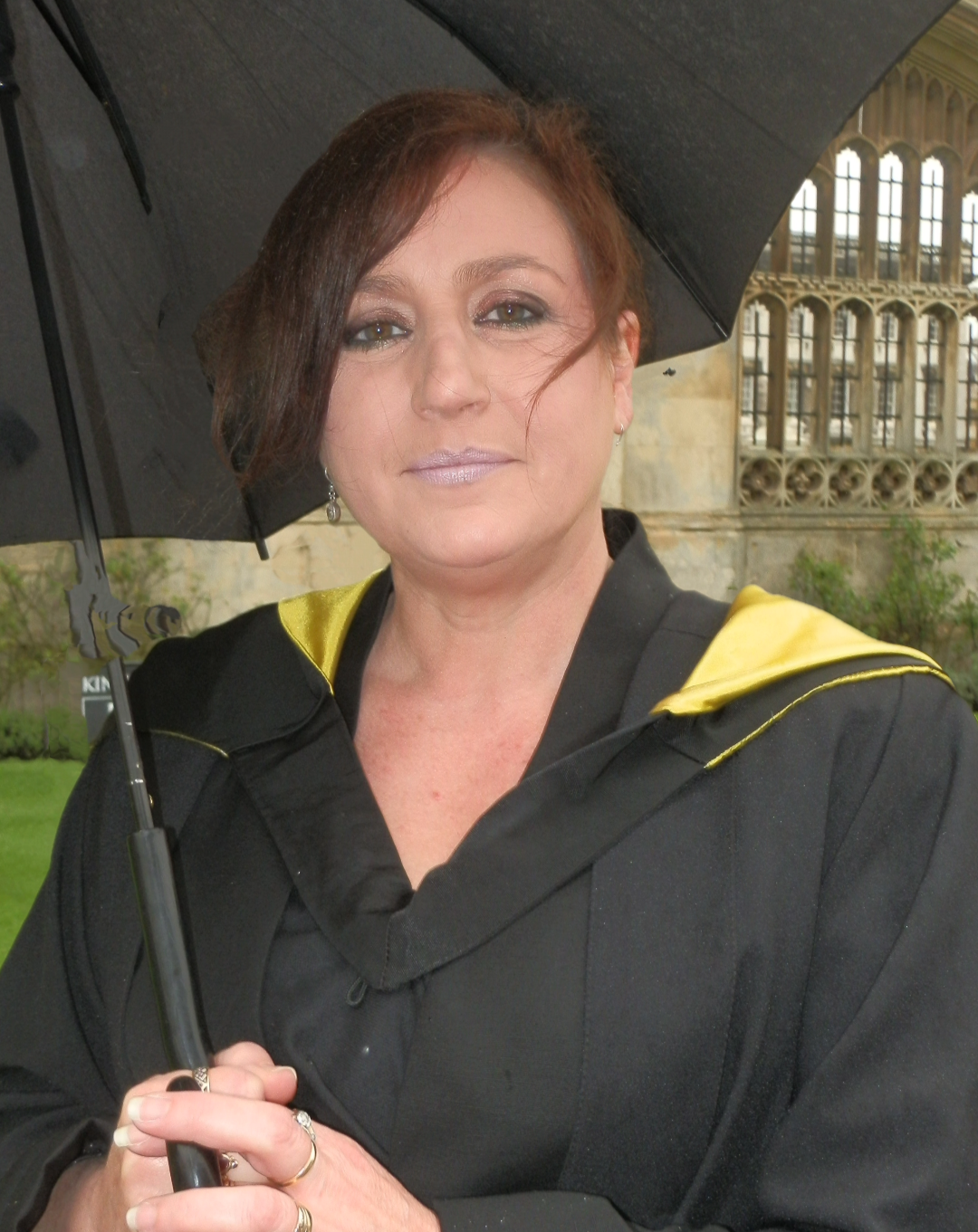
The author at Cambridge
Conclusion
It is interesting to note that the author also wrote a learned book on Oxford University and still is persistent that the institution at Cambridge was the first University. Fuller cites several references, notably memories of Oxford by Robert Hare in which the word Cambridge had been transposed in separate hand, to Oxford. On consulting the original document, Fuller was able to confirm his suspicion that the manuscript had been changed to read that Oxford was the first University. This and his other quoted references form a convincing argument for Cambridge. A second compelling argument is glaring; Why would the scholars of Oxford repair to Cambridge in 1208 if there was not an established centre of learning there to receive them? It should be noted that Oxford claims its’ first college was established in 1249 but that the first dedicated university building, ‘The Divinity School’ was not established until between 1427 and 1483. Whereas Cambridge claims ‘Hugo de Balsham’ established Peterhouse in 1284, after which followed many endowments including that of Pembroke by Marie de St Pol of Denny Abbey in 1347, specifically as a foundation for scholars of the university. To this day, Oxford is much less certain of its’ foundation myth.


Leave A Comment