

The Vale of York Hoard is a remarkable collection of Viking silver and gold artifacts discovered in the Vale of York, England. This hoard, one of the most significant Viking-age finds in Britain, has shed light on the Viking presence in the region and offers valuable insights into the social, economic, and cultural aspects of this tumultuous historical period. In this comprehensive account, we explore the discovery, contents, significance, and impact of the Vale of York Hoard.
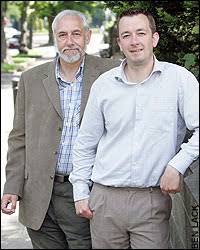
The story of the Vale of York Hoard began on January 27, 2007, when a metal detectorist’s David and Andrew Whelan made a remarkable discovery in a field near Harrogate, North Yorkshire, England. While searching for buried artifacts, the Whelan’s unearthed a small silver object that turned out to be a Viking-era ingot. Recognizing the significance of his find, they promptly reported it to the Portable Antiquities Scheme, a UK-based initiative that encourages the voluntary recording of archaeological objects discovered by the public.
Following the initial discovery, archaeologists from the York Archaeological Trust and the British Museum conducted a systematic excavation of the site. Over the course of several weeks, they meticulously uncovered a hoard of Viking-age treasures buried beneath the soil.

The Vale of York Hoard is an astonishing collection of over 617 silver and gold objects, making it one of the largest Viking hoards ever found in Britain. The artifacts date back to the late 9th and early 10th centuries, a period characterized by Viking raids and invasions in England.
The hoard contains a diverse range of items, including arm rings, coins, ingots, hacksilver (silver objects deliberately cut or broken for use as bullion), jewelry, and other precious metal fragments. The artifacts exhibit various styles, reflecting the Viking influence and their connections to other cultures and regions.
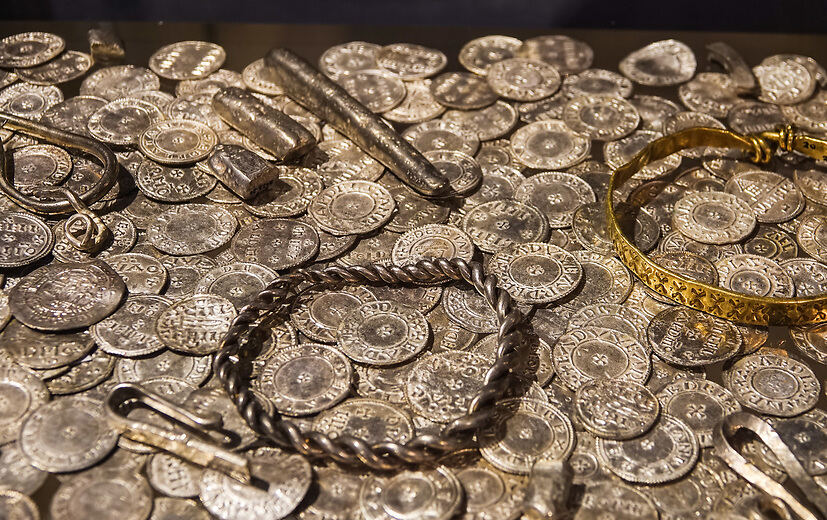
The Vale of York Hoard provides valuable insights into the Viking presence in the Vale of York and the broader socio-economic and cultural dynamics of the Viking Age. The hoard’s location in the heart of England demonstrates the extent of Viking influence and activity in the region during the late 9th and early 10th centuries.
One key aspect of the hoard’s significance is its composition. The presence of hacksilver indicates a form of currency and suggests that the artifacts were collected over a period of time, possibly as part of trade, tribute, or loot acquired through Viking raids. The diverse origins of the objects, including Anglo-Saxon, Carolingian, and Islamic influences, highlight the Vikings’ widespread trade and contact with different cultures.
Moreover, the sheer wealth represented by the Vale of York Hoard provides evidence of the economic and political power of the Viking elites during this period. The accumulation and burial of such precious artifacts also offer valuable insights into the practice of hoarding and the symbolic significance of buried treasures in Viking society.
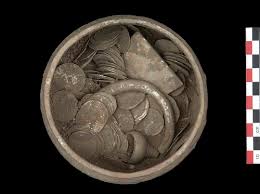
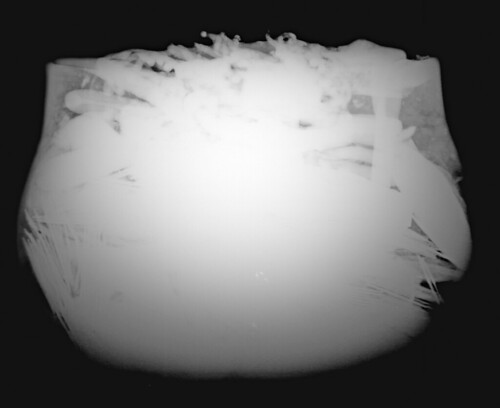
After its discovery, the Vale of York Hoard underwent extensive conservation and research. Experts carefully cleaned and analyzed each artifact to better understand their origins, craftsmanship, and historical context. The hoard’s contents are now housed in museums, with a significant portion being displayed at the Yorkshire Museum in York, England.
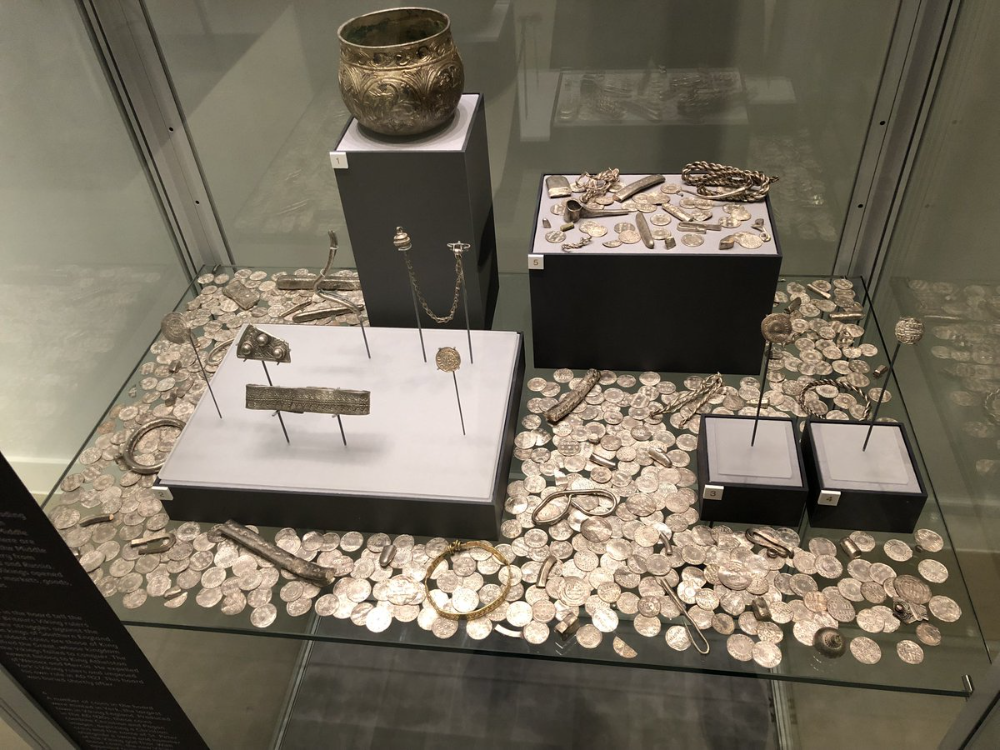
The display of the Vale of York Hoard in museums offers the public an opportunity to witness the beauty and historical significance of these Viking treasures. It also serves as an educational tool to promote awareness and understanding of the Viking Age and its impact on British history.
The Vale of York Hoard has significantly enriched our understanding of the Viking Age and the Vikings’ presence in Britain. By providing tangible evidence of Viking activity in the Vale of York, the hoard has shed light on the dynamics of Viking raids, trade, and interactions with local populations.
The artifacts within the hoard have also contributed to the study of Viking art, craftsmanship, and cultural exchange during this era. The combination of different artistic styles from various regions reflects the Vikings’ ability to assimilate and adapt elements from different cultures.
Additionally, the Vale of York Hoard serves as a reminder of the importance of responsible metal detecting and reporting. The collaboration between metal detectorists, archaeologists, and institutions has proven instrumental in preserving and interpreting these historical treasures.

The discovery of the Vale of York Hoard has been a momentous event in the study of the Viking Age in Britain. The hoard’s contents, ranging from precious metals to intricate artifacts, offer a window into the lives, activities, and interactions of the Vikings in the Vale of York during the late 9th and early 10th centuries.
Through careful preservation, research, and display in museums, the Vale of York Hoard continues to provide valuable insights into one of history’s most captivating eras. As an iconic representation of Viking wealth, power, and cultural exchange, the hoard stands as a testament to the enduring allure of the Viking legacy.




Leave A Comment