
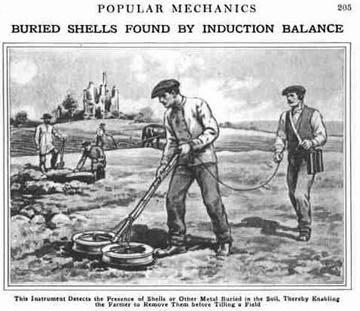
Metal detecting for treasure is a captivating activity that has fascinated individuals for many decades. The allure of discovering hidden artifacts, coins, and valuable objects buried beneath the earth’s surface has captivated the imagination of both amateur enthusiasts and professional treasure hunters alike. In this article, we will explore the origins and evolution of metal detecting as a hobby and shed light on the timeline of its inception.
The roots of metal detecting can be traced back to the early 20th century, although the practice did not gain widespread popularity until the mid-20th century. The initial attempts at metal detection were driven by practical applications rather than treasure hunting. In the late 19th century, inventors such as Alexander Graham Bell and Oliver Lodge developed metal detection devices for industrial purposes, primarily to locate and remove metallic objects accidentally left behind in patients after surgeries. These early devices were large and cumbersome, not suitable for recreational use.
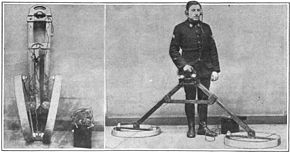
It was not until the 1930s that metal detectors started to emerge as tools for treasure hunting. Inspired by the possibility of finding lost and buried treasures, a small number of dedicated individuals began experimenting with homemade metal detectors. These early enthusiasts often constructed their detectors using basic radio and electronic components. However, the performance and reliability of these devices were limited.
The breakthrough for metal detecting as a hobby came in the 1950s and 1960s, with the development of more refined and commercially available metal detectors. Companies such as Fisher, White’s, and Garrett introduced models specifically designed for treasure hunting. These detectors utilised advances in electronics, employing vacuum tubes or transistors to enhance their sensitivity and detection capabilities.
During this period, the concept of using metal detectors for finding buried treasure gained significant attention and traction among the general public. Books, magazines, and movies romanticized the idea of discovering hidden treasures, fueling the imaginations of countless individuals. Popular culture icons like Errol Flynn in “The Goonies” and the adventurous archaeologist Indiana Jones contributed to the mystique surrounding the hobby.
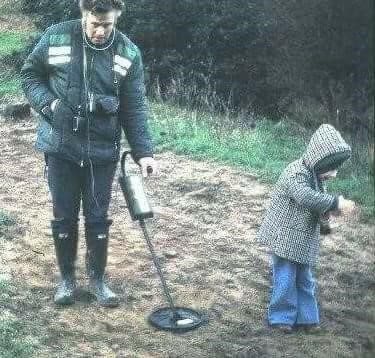
The Author and his dad. Around 1976, using a C -Scope 600 series.
The 1970s marked another significant milestone in the history of metal detecting. The advent of integrated circuits and microprocessors revolutionized the field, allowing for the development of more efficient and sensitive metal detectors. These advancements led to increased detection depths and the ability to discriminate between different types of metals. Discrimination capabilities enabled detectorists to focus on specific targets, such as coins, while ignoring unwanted objects like nails and bottle caps.
As technology continued to advance, metal detectors became more lightweight, portable, and user-friendly. This, coupled with decreasing costs, further popularized the hobby, making it accessible to a broader audience. Metal detecting clubs and societies were formed, fostering a sense of community among enthusiasts and providing platforms for sharing knowledge, experiences, and discoveries.
In recent years, metal detecting has benefited from the integration of modern technologies. The introduction of digital signal processing, advanced target identification features, and wireless connectivity has brought the hobby to new heights. Detectors now offer high-resolution displays, GPS functionality, and even smartphone integration, allowing enthusiasts to map their finds, record locations, and share their experiences with others online.

Today, metal detecting remains a popular pastime worldwide. Hobbyists and treasure hunters venture into fields, beaches, forests, and historical sites in search of hidden treasures. They discover ancient coins, jewelry, relics, and artifacts that shed light on our past and provide a tangible connection to history. Metal detecting has evolved from a niche pursuit to a recognized recreational activity, enjoyed by people of all ages and backgrounds.
While the origins of metal detecting can be traced back to the early 20th century, it was during the mid-20th century that the hobby truly took off. With the development of more refined and commercially available metal detectors, the dreams of finding buried treasure became a reality for countless enthusiasts. Over time, technological advancements have transformed metal detecting, making it more accessible, efficient, and rewarding. Today, metal detecting continues to captivate individuals, allowing them to unearth treasures and unravel the mysteries of the past.








Leave A Comment