
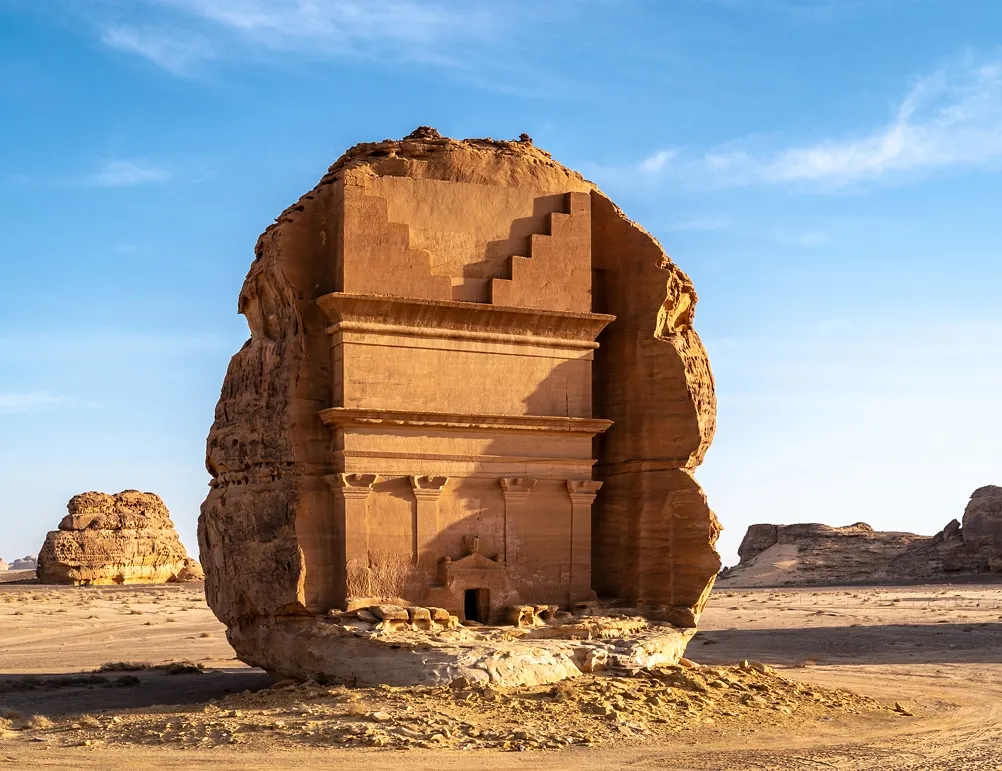
Hegra, also known as Al-Hijr or Mada’in Salih, is one of Saudi Arabia’s most remarkable archaeological sites. Located in the northwest of the country, this ancient city was once a thriving settlement of the Nabataean civilization, the same people who built Petra in modern-day Jordan. Recognized as Saudi Arabia’s first UNESCO World Heritage Site in 2008, Hegra is gaining global attention for its breathtaking rock-cut tombs, inscriptions, and historical significance.
The History of Hegra
Hegra dates back over 2,000 years and was a major trading hub along the Incense Route, a network of trade routes that connected Arabia, Egypt, and the Mediterranean. The Nabataeans, famous for their rock-cut architecture and advanced water management systems, made Hegra their second-largest city after Petra.
While Petra served as the Nabataean capital, Hegra functioned as a vital economic and cultural center. The city flourished from the 1st century BCE to the 1st century CE, during which its inhabitants carved elaborate tombs into the massive sandstone cliffs surrounding the area.
Architectural Wonders of Hegra
One of the most striking features of Hegra is its 131 monumental rock-cut tombs, many of which have intricate facades and inscriptions in Aramaic, Dadanitic, and Nabataean scripts. Some of the most famous tombs include:
- Qasr Al-Farid (The Lonely Castle) – This is the most iconic tomb in Hegra, notable for its unfinished facade and its solitary location in the desert.
- Jabal Ithlib – A sacred area featuring rock carvings and chambers believed to have been used for religious gatherings.
- The Diwan – A chamber carved into a rock, likely used for community meetings and rituals.
Rediscovery and Modern Significance
For centuries, Hegra remained largely unknown outside the Arabian Peninsula. European explorers in the 19th century documented the site, but it wasn’t until recent years that it became accessible to the public. Today, as part of Saudi Arabia’s Vision 2030 initiative to promote tourism, Hegra is at the center of efforts to showcase the country’s rich heritage.
The site is now open to visitors, offering guided tours, immersive experiences, and archaeological research opportunities. Modern technology, including drones and 3D mapping, is being used to uncover new details about its history and the lives of its ancient inhabitants.
Myths and Legends
Hegra has long been surrounded by myths and superstitions. Some locals believed the site was cursed, linking it to the Quranic story of the Thamud people, who were said to have been punished for their defiance of God. These tales contributed to the site’s isolation for many centuries. However, modern archaeology has helped separate history from legend, revealing Hegra as a place of cultural and historical significance rather than mystery and fear.
Hegra stands as a testament to the ingenuity and artistry of the Nabataean civilization. With its stunning tombs, inscriptions, and rich history, it offers a glimpse into a once-thriving ancient world. As Saudi Arabia continues to open its doors to tourism, Hegra is set to become a global attraction, inviting travelers and history enthusiasts to explore its secrets and marvel at its beauty.



Leave A Comment