
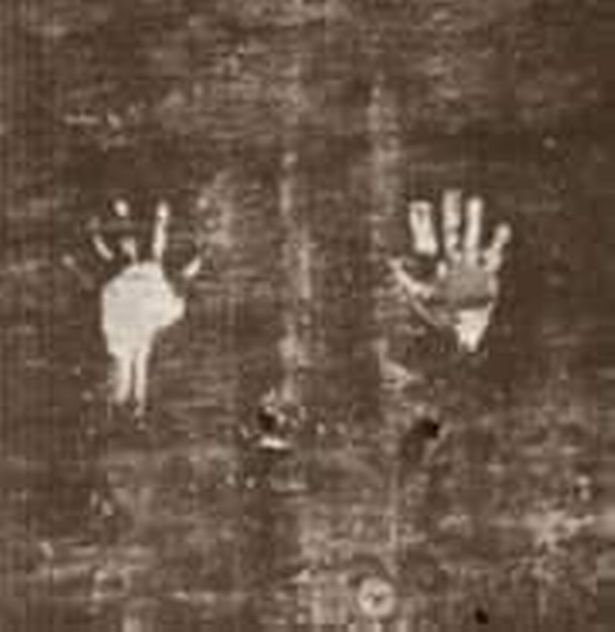
The Piece Hall in Halifax, West Yorkshire, is not only renowned for its historical significance as a cloth trading hub but also for an intriguing legend associated with mysterious handprints found at its Westgate entrance. These handprints have sparked various local tales, adding a layer of mystique to the site’s rich history.
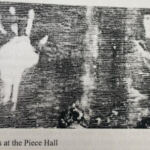
The Mysterious Handprints
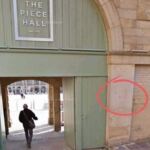
At the right pilaster of the Westgate entrance, two faint handprints are visible on the stone wall. Over time, these imprints have become less distinct but continue to be a focal point of local folklore.
Legends and Theories
Several theories attempt to explain the origin of these handprints:
- The Murderer’s Mark: One popular legend suggests that the handprints were left by a murderer attempting to escape capture. As the story goes, during his flight, the fugitive pressed his hands against the wall, leaving behind the enduring marks.
- The Witch’s Curse: Another tale proposes that the handprints are the result of a witch’s curse, embedding her mark on the building as a form of enchantment or retribution.
- The Fishmonger’s Touch: A less ominous theory attributes the handprints to a fishmonger who frequented the hall, leaving impressions over time due to the nature of his trade.
Cultural Impact
These legends have become an integral part of Halifax’s cultural narrative, captivating both locals and visitors. The handprints serve as a tangible connection to the past, inviting speculation and storytelling. They exemplify how physical marks can evolve into enduring myths, enriching the historical tapestry of landmarks like the Piece Hall.
While the true origin of the handprints remains a mystery, their presence continues to intrigue and inspire, adding to the allure of the Piece Hall as a site where history and legend intertwine.








Leave A Comment